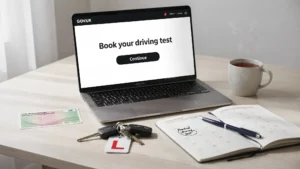
If you have searched for “driving lessons London”, you already know there is no shortage of options. The harder part is working out which instructor, lesson type, area and booking setup will actually help you make steady progress.
London is a brilliant place to learn because it exposes you to real-world driving early: tight residential streets, bus lanes, cycle traffic, busy junctions, one-way systems and fast-moving A-roads. But that also means choosing the right instructor matters. A cheap lesson with the wrong fit can cost more in the long run if you lose confidence, repeat basics or feel unprepared for your test.
Before you book, use this guide to compare driving lessons in London properly, avoid common mistakes and choose a setup that suits your confidence, timetable and budget.
Why learning to drive in London is different
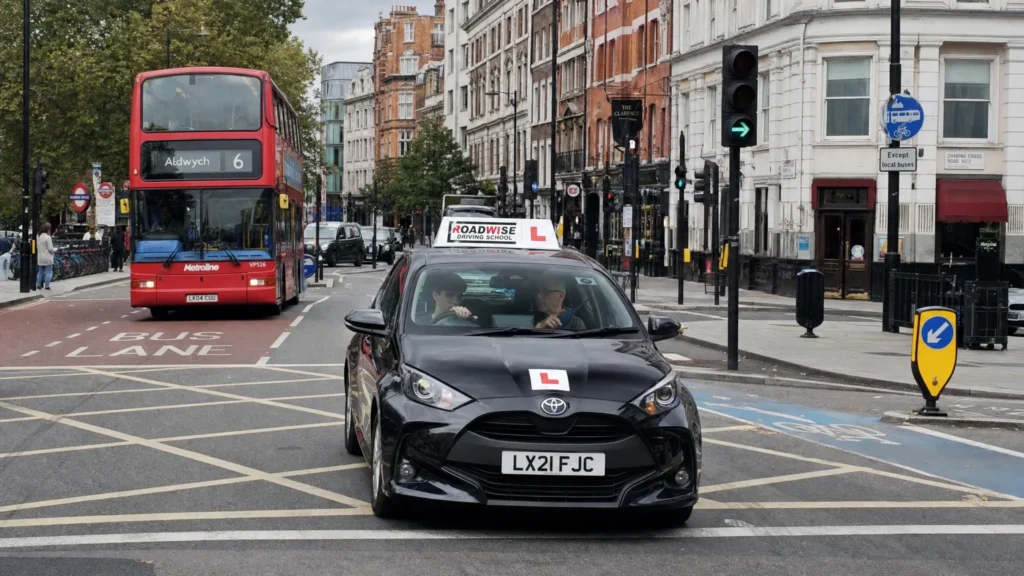
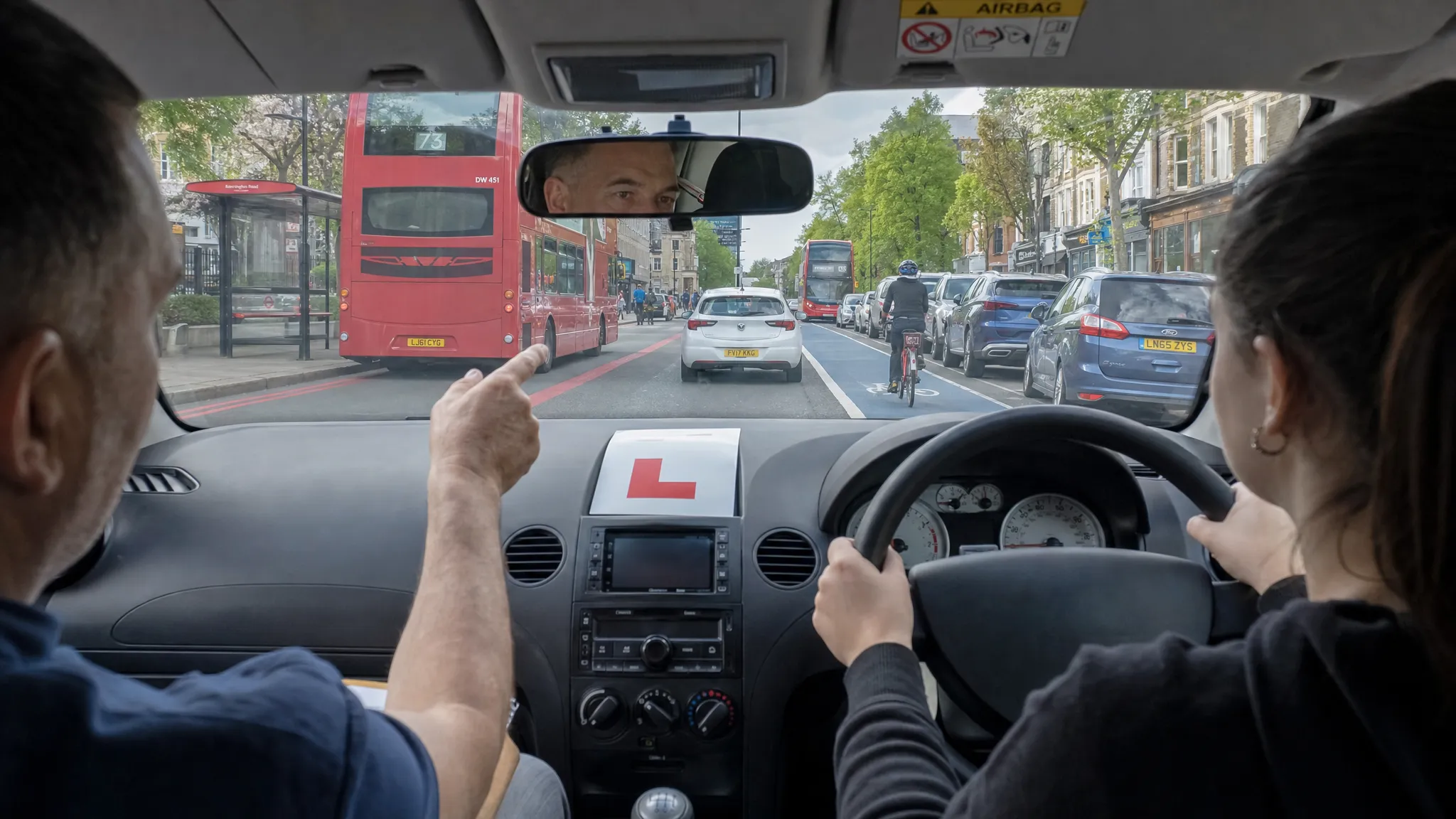
Learning in London is not necessarily harder than learning elsewhere, but it is often more intense. You may deal with cyclists, delivery riders, pedestrians, buses and complex road markings within the first few lessons, especially if you are based in Inner London.
That can be a positive thing. A good London driving instructor will not throw you into stressful traffic before you are ready. They will usually begin in quieter residential roads, industrial estates or low-traffic areas, then build towards busier routes once your clutch control, steering, observation and judgement improve.
London also varies hugely by postcode. A learner in Barnet, Croydon, Ealing, Tottenham, Wimbledon, Ilford or Bromley may face very different roads, traffic patterns and test centre options. This is why “near me” is not just about convenience. Local knowledge can help your instructor choose suitable practice areas, explain tricky junctions and prepare you for the types of roads you are likely to meet on the day of your test.
Check the instructor is qualified before you compare anything else
The first thing to check is whether the instructor is legally entitled to charge for driving lessons. In the UK, an approved driving instructor (ADI) displays a green badge in the windscreen. A trainee driving instructor, also known as a potential driving instructor (PDI), displays a pink badge.
A PDI can still be a good option if they are licensed, supervised and transparent about their status. What matters is that you know who is teaching you and that they are allowed to provide paid tuition.
You can also use the official GOV.UK service to find driving schools and lessons or ask the instructor directly about their badge, experience and teaching areas. A professional instructor should not be offended by this. In fact, they should make it easy for you to verify who they are.
What to ask before booking driving lessons in London
A short conversation before you book can save you weeks of frustration. Do not choose purely on price or the first available slot. In London, availability can be limited, so it is tempting to book quickly, but a few practical checks are worth making first.
| What to check | Good signs | Why it matters in London |
|---|---|---|
| Qualification | ADI or licensed PDI status is clear | You know the instructor is legally allowed to teach |
| Local coverage | They regularly teach in your postcode or nearby areas | They understand local roads, traffic patterns and test centres |
| Availability | They can offer consistent weekly or twice-weekly slots | Irregular lessons can slow your progress |
| Pickup location | They confirm home, work, college or station pickup if available | London travel time can eat into your lesson if not planned |
| Car type | Manual or automatic is clearly listed | Your choice affects your licence and learning curve |
| Reviews | Reviews mention patience, punctuality and clear explanations | Teaching style matters as much as experience |
| Pricing and policies | Lesson length, cancellation rules and block booking terms are clear | Hidden rules can make lessons more expensive than expected |
If you are nervous, ask how the instructor supports anxious learners. If you have already had lessons, explain what you have covered and what you struggle with. A good instructor will adapt the lesson plan instead of making you start again unnecessarily.
Manual or automatic lessons in London?
One of the biggest decisions before booking is whether to learn in a manual or automatic car.
Manual lessons give you a full manual licence if you pass, which means you can drive both manual and automatic cars. This can be useful if you expect to drive different vehicles for work, borrow family cars or keep your buying options open.
Automatic lessons can feel simpler because you do not need to manage the clutch or gears. In heavy London traffic, this can make lessons less physically and mentally tiring. Some learners progress faster in an automatic because they can focus more on observation, positioning and decision-making.
The trade-off is that if you pass in an automatic, your licence only allows you to drive automatic vehicles. If you later want to drive a manual, you will need to take another practical test in a manual car.
If you are unsure, read our full guide to automatic vs manual driving lessons before booking a block of lessons.
How much should you budget for London driving lessons?
London driving lessons are often towards the higher end of UK lesson prices, mainly because of demand, traffic, operating costs and travel time between pupils. The exact price depends on your area, instructor, lesson length, car type and whether you buy individual lessons or a block.
Instead of looking only at the hourly rate, think about value. A slightly more expensive instructor who explains things clearly, plans lessons well and gives you consistent feedback may help you need fewer hours overall. A cheaper instructor who is often late, cancels regularly or spends too much time talking at the roadside may not be cheaper in practice.
When comparing prices, check whether the quote is for 60 minutes, 90 minutes or 2 hours. Longer lessons can be useful in London because it takes time to reach varied roads or test routes, but they may feel tiring for complete beginners. Many learners start with 1-hour or 90-minute lessons, then move to 2-hour sessions as they gain stamina and confidence.
For wider UK budgeting guidance, see our driving lesson costs UK guide.
How many lessons will you need in London?
There is no fixed number of lessons that guarantees a pass. Your starting confidence, coordination, private practice, lesson frequency and instructor fit all play a role.
As a rough benchmark, many learners need several dozen hours of professional tuition before they are ready for the practical test. Some need less, especially if they practise privately between lessons. Others need more, particularly if they are nervous, have long gaps between lessons or are learning in very busy areas.
London can add extra time because you may need more practice with meeting traffic, multi-lane roundabouts, bus lanes, cyclists and complicated junctions. But learning in London can also make you a stronger driver after you pass, because you are building experience in demanding conditions from the start.
If you want a deeper breakdown, read our guide on how many driving lessons you need to pass.
Think about test centres before you book
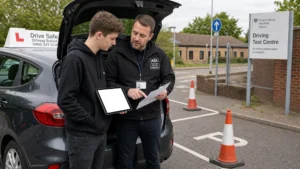
You do not need to choose your practical test centre on day one, but it is sensible to ask which London test centres your instructor usually covers. London and nearby Greater London test centres may include areas such as Morden, Mitcham, Greenford, Goodmayes, Hither Green, Isleworth, Pinner, Tottenham or Wood Green, depending on current DVSA availability.
Do not choose an instructor only because they promise to teach “test routes”. The DVSA can vary routes, and your examiner wants to see safe, independent driving rather than memorised roads. That said, local test centre knowledge is useful. Your instructor should help you understand the types of roads, junctions, speed changes and manoeuvre locations commonly found around your chosen test area.
London test availability can be competitive, so avoid leaving test planning until the last minute. Once you are making steady progress, speak to your instructor about realistic timing. Booking too early can create pressure, but waiting until you are fully ready before even checking availability may delay you unnecessarily.
For practical advice, see our guide to driving test waiting times.
Check pickup locations and travel time
London learners often want lessons from home, school, university, work or a nearby station. Many instructors offer flexible pickup locations, but you should confirm this before booking.
The pickup point affects how much useful driving time you get. If your instructor has to spend 20 minutes reaching a quiet practice area, a 1-hour lesson may feel short. In some cases, it may be better to meet at a convenient station, supermarket car park or quieter residential area if your instructor agrees.
Also ask where the lesson will end. Ending at home may be convenient, but ending near work or college could be more practical. The key is to agree this in advance, not during the lesson.
Read reviews for teaching style, not just star ratings
Star ratings are helpful, but the words in the review matter more. Look for comments about patience, calmness, punctuality, clear explanations and confidence building. If you are a nervous learner, reviews mentioning a calm approach are more useful than generic comments such as “great instructor”.
Also look for patterns. One bad review does not always tell the full story, but repeated complaints about cancellations, shouting, poor communication or unclear prices are warning signs.
If an instructor has no reviews, that does not automatically mean they are bad. They may be new to a platform or recently qualified. In that case, ask more questions before committing to a block booking.
Understand cancellation rules and block bookings
Before paying for a block of London driving lessons, make sure you understand the cancellation policy. Instructors often need notice because late cancellations leave gaps they cannot easily fill. This is reasonable, but the rules should be clear.
Ask these questions before paying:
- How much notice do I need to give if I cannot attend?
- What happens if the instructor cancels?
- Do block bookings expire after a certain time?
- Can unused lessons be refunded?
- Will the price change after the first block?
A professional instructor will have straightforward answers. If the terms are vague, rushed or only given after payment, be careful.
This is especially important when booking through any online platform. Learners should know how bookings, payments, reviews and personal details are handled. Professional service providers also need to protect their reputation and digital assets; in more IP-heavy industries, businesses may use IP licensing and enforcement tools for that purpose, while in driving tuition the learner-facing priority is clear terms, accurate profiles and trustworthy communication.
What should happen on your first London driving lesson?
Your first lesson should not feel like a test. It should be a calm introduction to the car, your current ability and your goals.
If you are a complete beginner, expect your instructor to check your provisional licence and eyesight, explain the cockpit drill, introduce the controls and choose a quiet area for your first moving-off practice. You may cover steering, stopping, mirrors, signalling and basic clutch control if you are in a manual car.
If you already have experience, your instructor may assess your driving on familiar roads, then identify gaps. This is not about criticising you. It helps them plan lessons properly and avoid wasting time on skills you already have.
For a full beginner walkthrough, read our guide on what to expect on your first driving lesson.
Red flags to avoid before you commit
Most driving instructors are professional and want their pupils to succeed, but it is still worth knowing the warning signs.
Be cautious if an instructor refuses to confirm their qualification, pressures you into a large block booking before you have met, gives unclear prices, regularly replies late, has repeated complaints about cancellations or makes you feel stupid for asking questions.
During the lesson, red flags include shouting, using a phone unnecessarily, grabbing the controls without explanation, spending excessive time on personal errands or failing to give feedback. You should feel challenged, but not belittled.
If the fit is not right after one or two lessons, you are allowed to change instructor. A good match can make a major difference to your confidence and progress.
How My Driving Instructor helps London learners book with confidence
My Driving Instructor is designed to make the booking process simpler for UK learners. Instead of messaging multiple instructors one by one, you can search by postcode, compare verified ADI and PDI instructors, read reviews and book lessons through the app.
For London learners, that can save time because availability, pickup location and local coverage matter so much. You can compare instructors based on the details that affect your real lesson experience, not just who appears first in a search result.
The app is free for students and instructors. Learners can manage bookings in-app, track lesson progress and choose instructors who fit their area, schedule and goals.
Frequently asked questions
Are driving lessons in London harder than elsewhere? Not necessarily, but London roads can be busier and more complex. A good instructor will start in quieter areas and gradually introduce harder situations such as bus lanes, cyclists, roundabouts and multi-lane junctions.
Should I choose a London instructor near my home or near my test centre? Ideally, choose someone who can cover both your pickup area and your likely test area. If that is not possible, prioritise consistent lessons with a qualified instructor, then plan test-centre practice later.
Is automatic better for London driving lessons? Automatic lessons can be easier in stop-start traffic and may suit nervous learners, but passing in an automatic only allows you to drive automatics. Manual gives you more flexibility if you pass in a manual car.
How early should I book my practical test in London? Speak to your instructor once you are progressing consistently. London test slots can be competitive, but booking before you are close to ready can create pressure and may lead to wasted fees.
Can I change driving instructor after booking lessons? Yes. If you are unhappy with the teaching style, communication or reliability, you can change instructor. Before paying for a block, check the refund and cancellation rules.
Ready to book driving lessons in London?
The best driving lessons in London are not always the cheapest or the closest. The right choice is a qualified instructor who understands your area, communicates clearly, teaches in a way that suits you and helps you build safe habits for real London roads.
Use My Driving Instructor to search by postcode, compare verified instructors, check reviews and book lessons in-app. Whether you are a complete beginner, switching instructors or preparing for your practical test, a better booking decision now can make the whole learning process smoother.
Key Takeaways
- Research your options and compare different instructors before booking
- Consider your learning style and choose manual or automatic accordingly
- Budget for the full journey including test fees and practice time
- Stay consistent with lessons to retain skills between sessions