In 2026, most learners should expect driving lesson prices in the UK to sit around £35 to £50 per hour, with London and other high-demand areas often higher. The real cost of learning to drive, though, is rarely just one hourly rate. It depends on where you live, whether you choose manual or automatic, how many lessons you need, and how much private practice you can safely add between paid sessions.
For many learners, a realistic full budget is £1,800 to £2,800 once lessons, provisional licence, theory test, practical test and a possible retest buffer are included. Some people spend less, especially with regular private practice. Others spend more if they need extra time, switch instructors, learn in an expensive area, or book automatic lessons at peak times.
This guide breaks down what learners are paying in 2026, how to compare instructors fairly, and where you can save money without choosing the cheapest option for the wrong reasons.
Average driving lesson prices in the UK in 2026
Across the UK, a standard one-hour driving lesson typically falls into these ranges:
| Lesson type | Typical 2026 price range | What to know |
|---|---|---|
| Manual driving lesson | £35 to £48 per hour | Often cheaper than automatic, but clutch and gears can take more time to master |
| Automatic driving lesson | £38 to £55 per hour | Usually costs more per hour, but some learners progress faster |
| 90-minute lesson | £52 to £78 | Popular because it gives enough time for routes, feedback and manoeuvres |
| 2-hour lesson | £70 to £105 | Good for test route practice and learners who want fewer weekly sessions |
| Intensive course | Often £800 to £2,000+ | Depends heavily on hours included, location and whether test fees are included |
These are broad market ranges, not fixed national prices. Driving instructors are self-employed or work under different franchise arrangements, so two instructors in the same town may charge different rates. A higher hourly rate can still be better value if the instructor is reliable, structured and helps you progress with fewer wasted hours.
If you are comparing 2026 prices against last year, you may also find it helpful to look at our earlier complete UK driving lesson cost guide for 2025 to see how learner budgets have changed.
Why driving lessons cost more in some areas
Location is one of the biggest factors behind driving lesson prices. In busy cities, instructors often face higher fuel costs, insurance costs, parking pressure, congestion, low-emission zone charges, and more unpaid travel time between pupils. In rural areas, the hourly rate may look lower in some towns, but instructors may charge more if they need to travel further for pickups.
Here is a practical guide to typical 2026 price bands by area:
| Area type | Typical hourly range in 2026 | Why prices vary |
|---|---|---|
| London and inner commuter areas | £42 to £55+ | High demand, congestion, higher operating costs and longer travel times |
| South East England | £38 to £50 | Strong demand and higher general living costs |
| Large northern cities | £34 to £46 | Competitive markets, but popular instructors may charge more |
| Midlands cities and towns | £33 to £45 | Often slightly lower than London, with variation by postcode |
| Scotland major cities | £34 to £47 | City demand, hill starts, tram or bus lane complexity in some areas |
| Wales and smaller towns | £32 to £44 | Often cheaper, but availability can vary significantly |
| Rural and semi-rural areas | £35 to £48 | Less traffic, but more instructor travel time and fewer local options |
The best way to compare prices is by postcode, not by national average. A learner in central London and a learner in a small town in Wales are not buying the same service environment, even if both are booking a one-hour lesson.
What affects the total cost of learning to drive?
The hourly price is only one part of the picture. The biggest cost driver is usually the number of lessons you need before you are test-ready.
According to GOV.UK guidance on learning to drive, there is no minimum number of lessons or practice hours required before taking your test. In practice, learners vary widely. Confidence, road experience, lesson frequency, instructor quality, private practice and test nerves all make a difference.
The common DVSA benchmark often referenced by instructors is around 45 hours of professional lessons plus private practice, but this is not a target everyone must hit. Some learners need fewer hours. Others need more, especially if they have long gaps between lessons or start in a complex driving area.
The total cost is affected by:
- Lesson frequency: Weekly lessons usually build skill more efficiently than one lesson every few weeks.
- Private practice: Safe practice with a qualified supervising driver can reduce the number of paid lessons needed.
- Instructor fit: A calm, structured instructor can save money by reducing repeated mistakes and confusion.
- Manual or automatic choice: Automatic lessons often cost more, but may feel simpler for some learners.
- Test centre difficulty: Complex roundabouts, fast dual carriageways or heavy urban traffic can require more preparation.
- Cancellations and gaps: Long breaks can mean spending time and money rebuilding confidence.
This is why a £38 instructor who helps you pass in 40 hours may cost less overall than a £32 instructor who leaves you needing 55 hours.
Example learner budgets for 2026
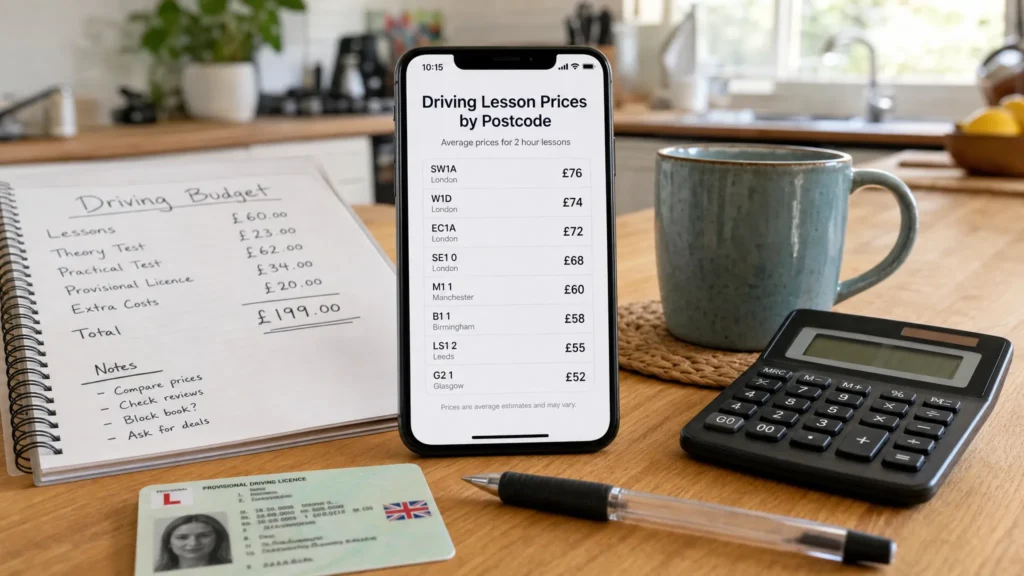
To make the numbers clearer, here are three realistic examples using common 2026 lesson prices. These calculations include a provisional licence, theory test and weekday practical car test, but they do not include optional learner insurance, private practice costs, extra test attempts or car hire fees if charged separately.
| Learner scenario | Lesson cost example | Official fees estimate | Approximate total |
|---|---|---|---|
| Efficient learner with private practice | 30 hours at £38 = £1,140 | £119 | £1,259 |
| Typical learner budget | 45 hours at £40 = £1,800 | £119 | £1,919 |
| Learner needing extra time | 60 hours at £45 = £2,700 | £119 | £2,819 |
For official fees, a car theory test is currently £23, while the standard weekday practical car test fee is £62 in Great Britain. Practical tests at evenings, weekends and bank holidays usually cost more. Always check the latest official driving test costs on GOV.UK before budgeting, as fees can change.
Manual vs automatic lesson prices
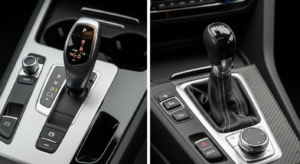
Automatic lessons usually cost slightly more per hour than manual lessons. This is partly because automatic instructor cars are often more expensive to buy, lease, insure and maintain. Demand is also increasing as more learners choose automatics and electric vehicles become more common.
However, the cheapest option depends on the learner, not just the price list.
| Choice | Typical price pattern | Pros | Cost warning |
|---|---|---|---|
| Manual | Usually lower per hour | Gives you a licence for manual and automatic cars | Gear changes and clutch control may take longer |
| Automatic | Usually higher per hour | Simpler controls, often less stalling and clutch anxiety | Your licence will only allow automatic vehicles |
If you are anxious about gears or live in a very stop-start urban area, automatic may be worth considering. If you want the widest choice of future cars, manual may still be the more flexible route. Either way, ask instructors how they structure lessons, not just what they charge.
The extra costs learners often forget
Many learners budget for lessons but forget the smaller costs that build up around them. Some are official fees. Others depend on your instructor, your household and how quickly you pass.
| Cost | Typical amount | Notes |
|---|---|---|
| Provisional driving licence | £34 online, £43 by post | Check GOV.UK for the latest application fee |
| Theory test | £23 | Required before booking the practical test |
| Practical car test | £62 weekday, £75 evening/weekend/bank holiday | Applies in Great Britain at the time of writing |
| Instructor car hire for test | Often one to three lesson hours | Many instructors charge for the time before, during and after the test |
| Learner driver insurance | Varies widely | Only needed for private practice in a suitable car |
| Retest costs | Test fee plus more lessons | A sensible budget includes a retest buffer |
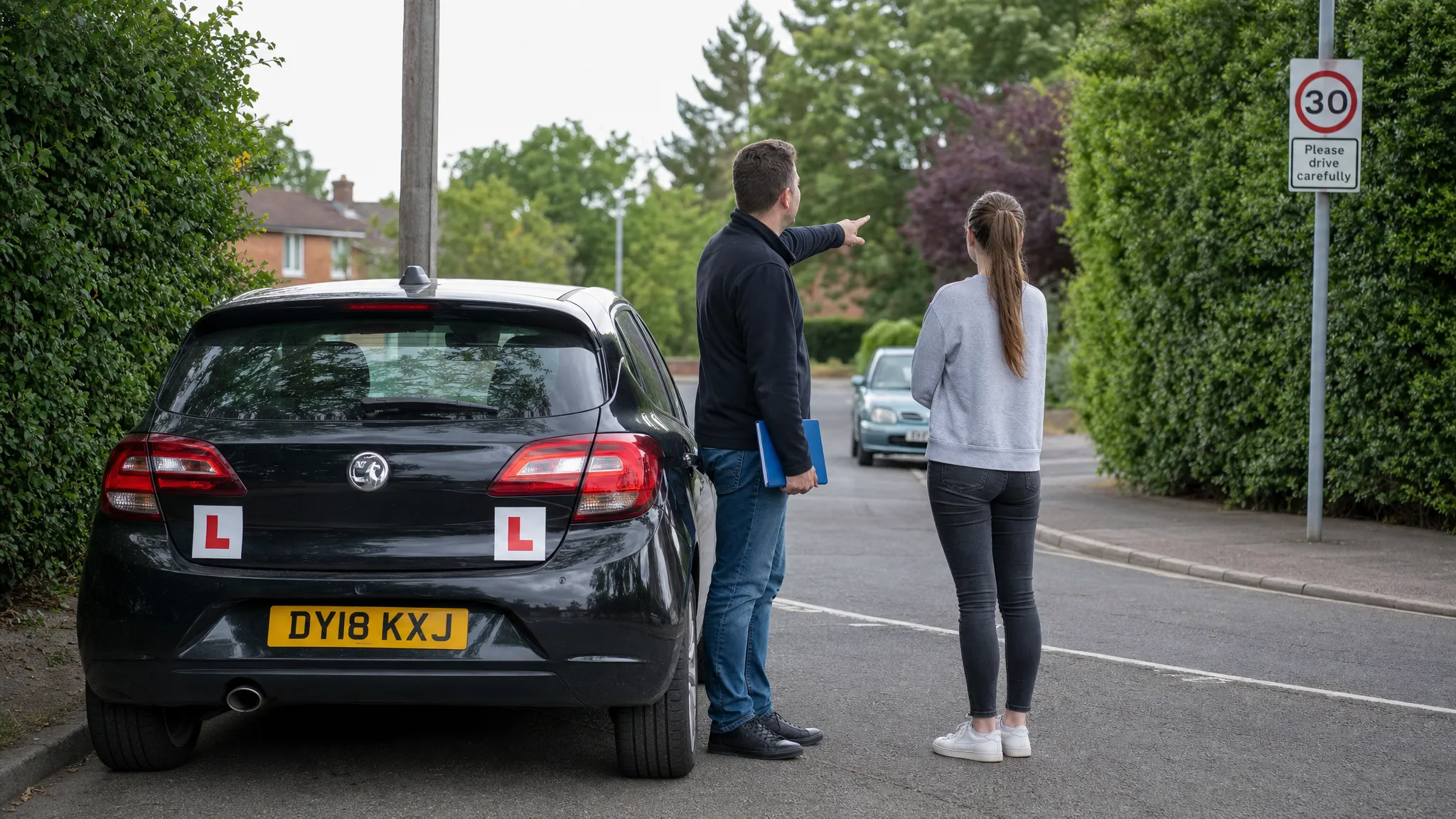
Before you book, ask whether the lesson price includes pickup and drop-off, whether test-day car use is charged at the normal lesson rate, and what the cancellation policy is. These details can make a noticeable difference to your final spend.
Are intensive driving courses cheaper?
Intensive courses can look cheaper because you see one package price instead of months of weekly payments. They are not automatically better value.
A 30-hour intensive course at £1,350 is still £45 per hour. That may be good value if the instructor is strong, the schedule suits your learning style, and you already have a test booked at the right time. It may be poor value if you feel rushed, get tired, or need extra lessons afterwards.
Intensive courses tend to work best for learners who already understand the basics, can take time off work or study, and cope well with several hours of driving in a short period. Nervous beginners often benefit from a steadier weekly structure.
How to compare driving instructors without overpaying
A fair comparison goes beyond hourly price. You are choosing someone who will teach you a safety-critical skill, prepare you for the test, and help you build confidence for real driving after you pass.
When comparing instructors, look at:
- Qualification status: ADIs are fully approved driving instructors, while PDIs are trainee instructors licensed to teach.
- Reviews and reliability: Consistent punctuality and clear communication matter.
- Local test centre knowledge: Instructors should understand local roads without only teaching memorised routes.
- Lesson structure: You should know what you are working on and what comes next.
- Availability: A good price is not useful if you can only get one lesson a month.
- Teaching style: Calm, constructive feedback is especially important for nervous learners.
For a more detailed checklist, see our guide on how to compare local driving instructors near you. If price is your main concern, our advice on finding a cheap driving lesson near you that is still worth it explains how to avoid false economy.
Why apps are changing how learners book lessons
Learners increasingly expect to compare instructors, check availability and book from their phone. This matters for price transparency because it reduces the old problem of calling multiple instructors, waiting for replies, and not knowing whether the quoted price is competitive for your postcode.
The wider shift towards app-led services is not unique to driving lessons. Many consumer marketplaces now depend on smooth mobile booking, clear profiles and trust signals, which is why startups often work with specialists such as a premium mobile app development agency when building iOS and Android products. For learner drivers, the practical benefit is simple: better digital tools can make it easier to compare options before committing your money.
With My Driving Instructor, learners can search by postcode, compare verified ADI and PDI instructors, check reviews, and book lessons in the app. That makes it easier to understand what local instructors charge rather than relying on a vague national average.
How to reduce your total driving lesson cost in 2026
Saving money on driving lessons is not about choosing the lowest hourly rate. It is about reducing wasted time and improving the quality of each hour you pay for.
Start by taking lessons regularly. One lesson a week is usually better than sporadic sessions because you spend less time relearning. If you can book 90-minute lessons, you may also get more value from each session because there is enough time to recap, practise and review properly.
Private practice can help, but only when it is safe and structured. Ask your instructor what to practise between lessons, then focus on those skills with a supervising driver. Random driving around can build confidence, but targeted practice is usually more useful.
You can also reduce costs by preparing for the theory test early. Learners sometimes delay practical progress because they cannot book a test without passing the theory. Passing it in good time keeps your learning plan moving.
Finally, avoid switching instructors repeatedly unless there is a clear reason. Sometimes a switch is the right decision, especially if communication is poor or lessons feel unstructured. But changing too often can create gaps and duplicated learning.
What is a fair price for a good driving instructor?
A fair price is one that reflects your local market, the instructor’s qualification, vehicle type, availability and teaching quality. In 2026, a good instructor charging £40 to £48 per hour in a busy area is not unusual. In London or high-demand commuter towns, £50 or more may be normal.
Instead of asking, “Is this instructor cheap?”, ask, “Will this instructor help me become test-ready efficiently and safely?” The second question is better for your wallet and your confidence.
If an instructor is much cheaper than everyone else nearby, check why. They may be new and building a diary, which can be perfectly fine. But you should still confirm their ADI or PDI status, reviews, cancellation policy and availability. If an instructor is much more expensive, ask what is included and whether their schedule suits your test goals.
Frequently Asked Questions
How much is a driving lesson in the UK in 2026? Most learners pay around £35 to £50 per hour in 2026. London, the South East and high-demand areas can be higher, while some smaller towns may be cheaper.
How much should I budget to learn to drive? A realistic total budget is often £1,800 to £2,800, including lessons and basic official test fees. Your final cost depends on lesson hours, private practice, location and whether you need retests.
Are automatic driving lessons more expensive? Usually, yes. Automatic lessons often cost a few pounds more per hour because vehicles can cost more to run and demand is high. However, some learners need fewer hours in an automatic.
Is it cheaper to book block driving lessons? Sometimes. Many instructors offer small discounts for block bookings, but always check refund rules, expiry dates and whether you are comfortable with the instructor before paying for a large package.
How many driving lessons do I need before my test? There is no legal minimum. Many learners use the common benchmark of around 45 professional hours plus private practice, but the right number depends on your confidence, ability, lesson frequency and local roads. Our guide to how many driving lessons you may need to pass explains this in more detail.
Find driving lesson prices near you
National averages are useful, but your postcode tells the real story. With My Driving Instructor, you can search for verified driving instructors near you, compare local prices, read reviews and book lessons through a free app built for UK learners.
Compare instructors before you commit, choose the teaching style that suits you, and build a realistic 2026 driving lesson budget with confidence.
Key Takeaways
- Research your options and compare different instructors before booking
- Consider your learning style and choose manual or automatic accordingly
- Budget for the full journey including test fees and practice time
- Stay consistent with lessons to retain skills between sessions