Many learners treat DVSA test booking as a race to grab the first appointment that appears. That is understandable, especially when local waiting times are long, but the earliest slot is not always the best slot.
The right driving test slot is the one that matches your readiness, your instructor’s availability, the car you will use, the test centre you know, and the driving conditions you can handle confidently. Book too late and you may lose momentum. Book too early and you risk turning test day into an expensive practice run.
This guide explains how to approach DVSA test booking strategically, so you can secure a practical test date that gives you the best chance of passing, not just the quickest appointment on the screen.
What DVSA test booking actually covers
In Great Britain, practical car driving tests are booked through the Driver and Vehicle Standards Agency, usually via the official GOV.UK driving test booking service. If you live in Northern Ireland, the process is handled separately through the Driver and Vehicle Agency on nidirect.
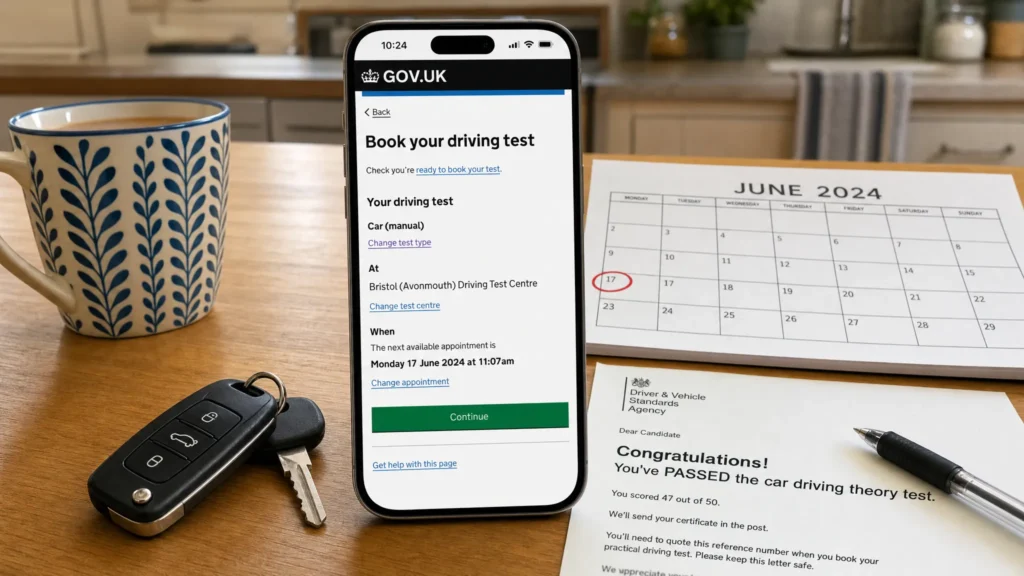
For learner drivers in England, Scotland and Wales, a DVSA test booking is not just about choosing a date. You will normally need to select a test centre, choose an available time, enter your licence and theory test details, and pay the test fee shown by the official service.
Before you start, make sure you have the basics ready.
| What to prepare | Why it matters |
|---|---|
| Provisional driving licence number | Needed to identify you and confirm eligibility |
| Theory test pass details | You usually need a valid theory pass before booking a car practical test |
| Preferred test centres | Helps you compare realistic options quickly |
| Instructor availability | Prevents booking a date when their car or diary is unavailable |
| Payment card | Required to complete the official booking |
| Calendar of work, college or family commitments | Reduces the chance of needing to change the test later |
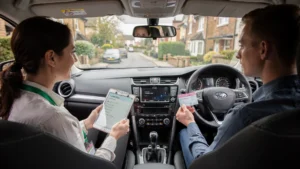
It is also sensible to speak to your instructor before you book. If you plan to use their car, they need to be available for the warm-up lesson, the test itself, and the journey home afterwards.
Define the right slot before you search
The biggest mistake learners make is searching for a test before deciding what a suitable slot looks like. When availability is limited, it is easy to panic-book a date that does not fit your preparation.
A good DVSA test booking should answer five questions clearly: Are you likely to be test-ready by that date? Is your instructor available? Have you practised around that test centre? Can you manage the time of day? Will the date leave enough room for final lessons?
If the answer to any of those is uncertain, do not rush. You can still book a placeholder if your instructor agrees, but it should be a realistic placeholder, not a date chosen purely out of frustration.
If you are unsure whether to book now or wait, it may help to compare your current driving against a readiness checklist. Our guide on whether to take your drivers test now or later explains the signs that you are genuinely ready, rather than just tired of lessons.
Choose a test centre for familiarity, not just availability
When local test centres are full, it can be tempting to book anywhere with an open slot. Sometimes that can work, especially if you are willing to travel and practise the area. But an unfamiliar test centre can add pressure on the day.
The best test centre is usually one where you have built real experience of local road types. That might include busy roundabouts, multi-lane junctions, rural roads, hill starts, complex one-way systems, or narrow residential streets. The examiner will not expect you to know a fixed route, but you should be comfortable reading the roads commonly found near that centre.
Avoid choosing a centre because someone online says it is easy. Test difficulty depends on your skills, traffic conditions, route, weather, nerves, and how you respond to mistakes. Pass rates can vary between centres, but they do not guarantee your individual result.
A practical approach is to shortlist two or three centres that you can realistically practise before test day. If you expand your search too far, ask your instructor whether they can cover lessons in that area and whether their car will be available for the test.
Pick the date around your learning curve
A good test date should create urgency without creating panic. Most learners benefit from a few focused lessons before the test, especially to polish independent driving, manoeuvres, judgement at junctions, and safe decision-making under pressure.
Think of the date as a target. If your instructor still needs to prompt you regularly on mirrors, speed, positioning, planning, or meeting traffic, a very early slot may not be wise. If you are driving independently with only occasional minor feedback, a closer date might be appropriate.
Here is a simple way to judge timing.
| Your current level | Booking strategy |
|---|---|
| Still making repeated serious or safety-related errors | Wait before booking or choose a later slot |
| Mostly independent but inconsistent under pressure | Book a realistic date with time for targeted lessons |
| Consistently safe across different roads and conditions | Look for earlier slots if instructor availability supports it |
| Test-ready but waiting a long time locally | Consider nearby centres you can practise properly |
The goal is not perfection. Learners can pass with some minor faults. The key is whether your driving is consistently safe, legal, controlled and independent.
Choose a time of day you can handle
There is no magic test time that guarantees an easier route. However, the time of day can affect the type of traffic you encounter. A 8:10am test may involve school traffic, commuters and busy junctions. A late afternoon test might bring heavier traffic and tiredness. Mid-morning or early afternoon can feel calmer in some areas, but that is not guaranteed.
Instead of hunting for the supposedly easiest time, choose a time you have practised. If most of your lessons are quiet Sunday mornings, but your test is booked for a weekday rush hour, you may feel unprepared. Ask your instructor to schedule lessons at similar times to your test where possible.
Also consider your own energy. If you are sharper in the morning, an early test may suit you. If you need time to settle your nerves, a slightly later slot might be better. The right time is personal.
Use cancellations without losing control
Cancellation slots can be useful, but they should not turn your booking strategy into chaos. An earlier date is only helpful if it still gives you enough time to prepare and fits your instructor’s diary.
When checking for earlier appointments, keep your search focused. Decide which centres you will accept, what dates are too soon, and which times are impossible. That way, you can act quickly when a suitable slot appears without making a rushed decision.
Good cancellation habits include checking the official service regularly, being flexible with nearby test centres you know, and confirming your instructor’s availability before changing the booking. If you want more detail, we have a separate guide on legitimate ways to book a practical driving test faster in the UK without relying on risky shortcuts.
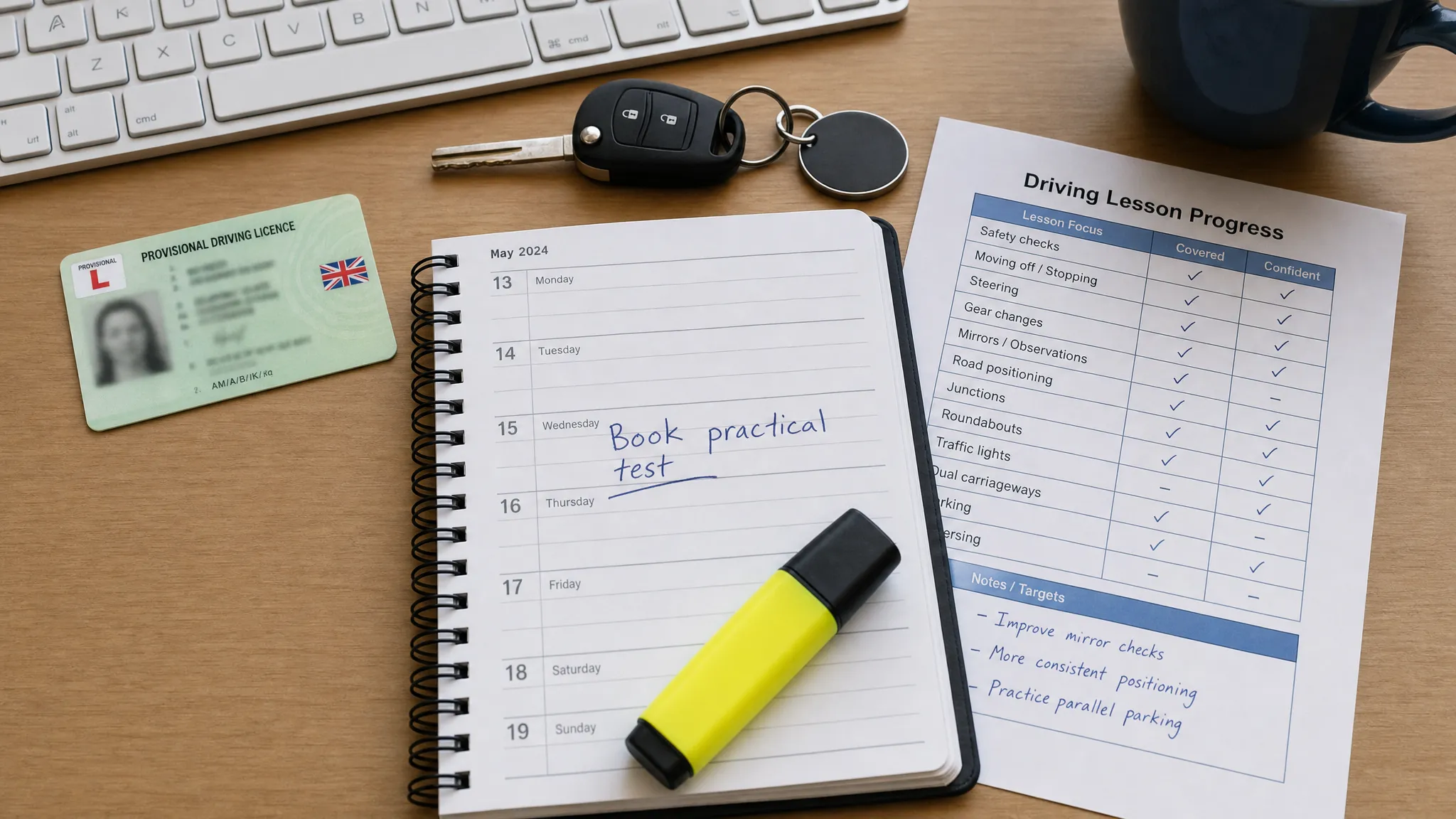
Remember that changing a test at the last minute can create problems. In Great Britain, you normally need to give enough notice to change or cancel your test without losing the fee, and the official rules can change, so always check GOV.UK before making decisions. You should also be aware that there is a limit to how many times you can change a booking before you may need to cancel and rebook.
Avoid unofficial booking traps
High demand for tests has created a market for third-party services, cancellation alerts and, unfortunately, some misleading sellers. Not every third-party tool is unsafe, but you should be cautious.
Never buy a driving test slot from someone on social media. Be wary of anyone who claims to have secret access to DVSA appointments or asks for more personal information than necessary. Your practical test should be visible through the official booking system, and the fee should be clear before you pay.
Use the same common-sense check you would use for any appointment-based service: clear availability, transparent pricing, real contact details and a trustworthy reputation. For example, when people compare local home services, a page such as TapTech’s plumbing and drain specialists shows how useful it is when a provider explains its service area and approach before an enquiry. With DVSA test booking support, look for the same clarity, and remember that your actual driving test appointment should always be confirmed through official channels.
If you use a cancellation alert service, treat it as a notification tool, not a guarantee. It may help you spot openings faster, but it cannot make you test-ready, and it should not pressure you into accepting a poor slot.
Coordinate your booking with your instructor
Your instructor is one of the best people to help you judge whether a slot is realistic. They see how you drive when you are tired, nervous, distracted, or dealing with unfamiliar traffic. That insight matters more than a calendar date.
Before committing to a DVSA test booking, ask your instructor three practical questions: Do you think I can be ready by this date? Are you and the car available? What should we focus on between now and the test?
If your instructor says the date is too soon, listen carefully. It does not mean you are failing. It usually means they want you to avoid wasting the fee and damaging your confidence. A slightly later test with stronger preparation is often better than an early test with avoidable faults.
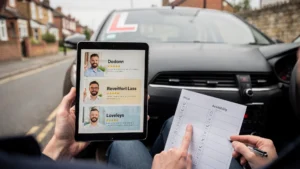
This is where a structured lesson plan helps. With My Driving Instructor, learners can search by postcode, compare verified ADI and PDI instructors, check reviews, book lessons and track progress. That makes it easier to connect your test date with actual preparation, rather than guessing whether you are ready.
Build a final test plan once the slot is booked
Once you have secured the right slot, your focus should shift from searching to preparing. Avoid changing your booking repeatedly unless there is a clear benefit. Constantly checking for a better date can increase nerves and distract you from practice.
Use the remaining time to work on the areas most likely to affect your result. These often include observation at junctions, mirror checks before changing speed or direction, lane discipline, meeting oncoming traffic, parking accuracy, and responding calmly after a mistake.
You should also plan the practical details. Know how you will get to the test centre, what time your warm-up lesson starts, what documents you need, and whether you feel comfortable with the car. If you are unsure what the day itself looks like, our guide to what happens on the UK car test from start to finish can help remove some of the uncertainty.
The right slot gives you a fair opportunity. Your preparation is what turns that opportunity into a pass.
Frequently Asked Questions
What is the best way to make a DVSA test booking? The safest route in England, Scotland and Wales is the official GOV.UK booking service. It shows available test centres, dates, times and the current fee before you pay.
Should I book the earliest driving test slot I can find? Not always. The earliest slot is only worth taking if you are likely to be ready, your instructor is available, and you can practise around the chosen test centre before the date.
Can I change my DVSA test booking after I have booked? Usually, yes. You can change a practical test booking through the official service, but there are notice rules and limits, so check the current GOV.UK guidance before making changes.
Is it better to book at an easier test centre? A familiar test centre is usually better than a supposedly easy one. You are more likely to drive confidently where you understand the local road layout and have practised common hazards.
How can I get a quicker driving test slot? Check for cancellations regularly, consider nearby centres you can practise, stay flexible with times, and confirm instructor availability before moving your booking. Avoid anyone claiming secret access to DVSA slots.
Ready to secure the right slot?
A smart DVSA test booking is about timing, readiness and support. Before you book, speak to your instructor, shortlist realistic test centres, and choose a slot that gives you enough time to become consistently safe and independent.
If you need help finding the right instructor for your test plan, My Driving Instructor lets you search verified instructors by postcode, compare reviews, book lessons and track your progress for free. The right support can make the right slot much easier to choose.
Key Takeaways
- Research your options and compare different instructors before booking
- Consider your learning style and choose manual or automatic accordingly
- Budget for the full journey including test fees and practice time
- Stay consistent with lessons to retain skills between sessions