Finding the right instructor can make the difference between steady, confident progress and weeks of frustrating lessons that never quite feel focused. If you are comparing driving instructors in Sheffield, the best choice is not always the closest, cheapest or first available option. You need someone qualified, reliable and suited to the way you learn.
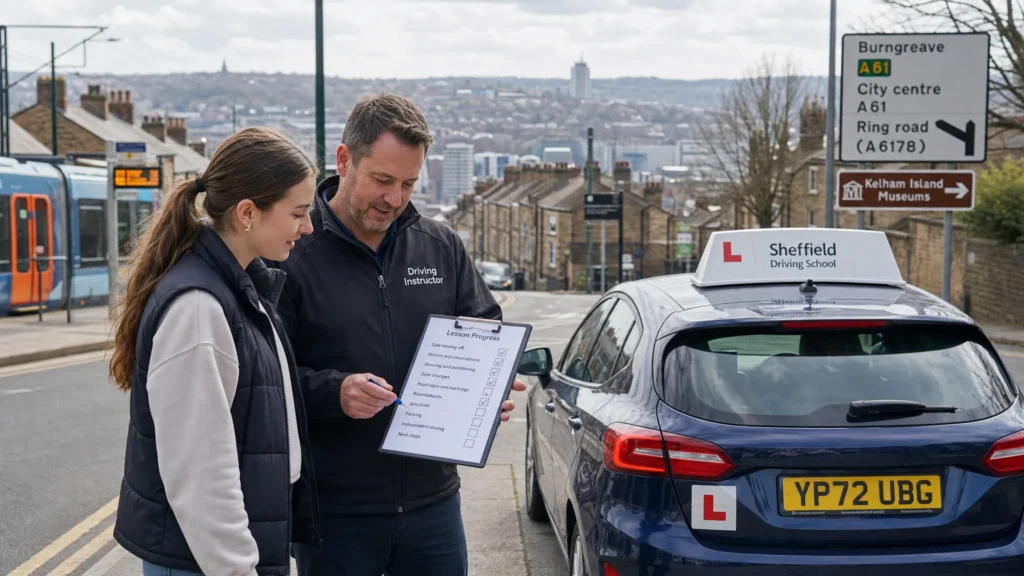
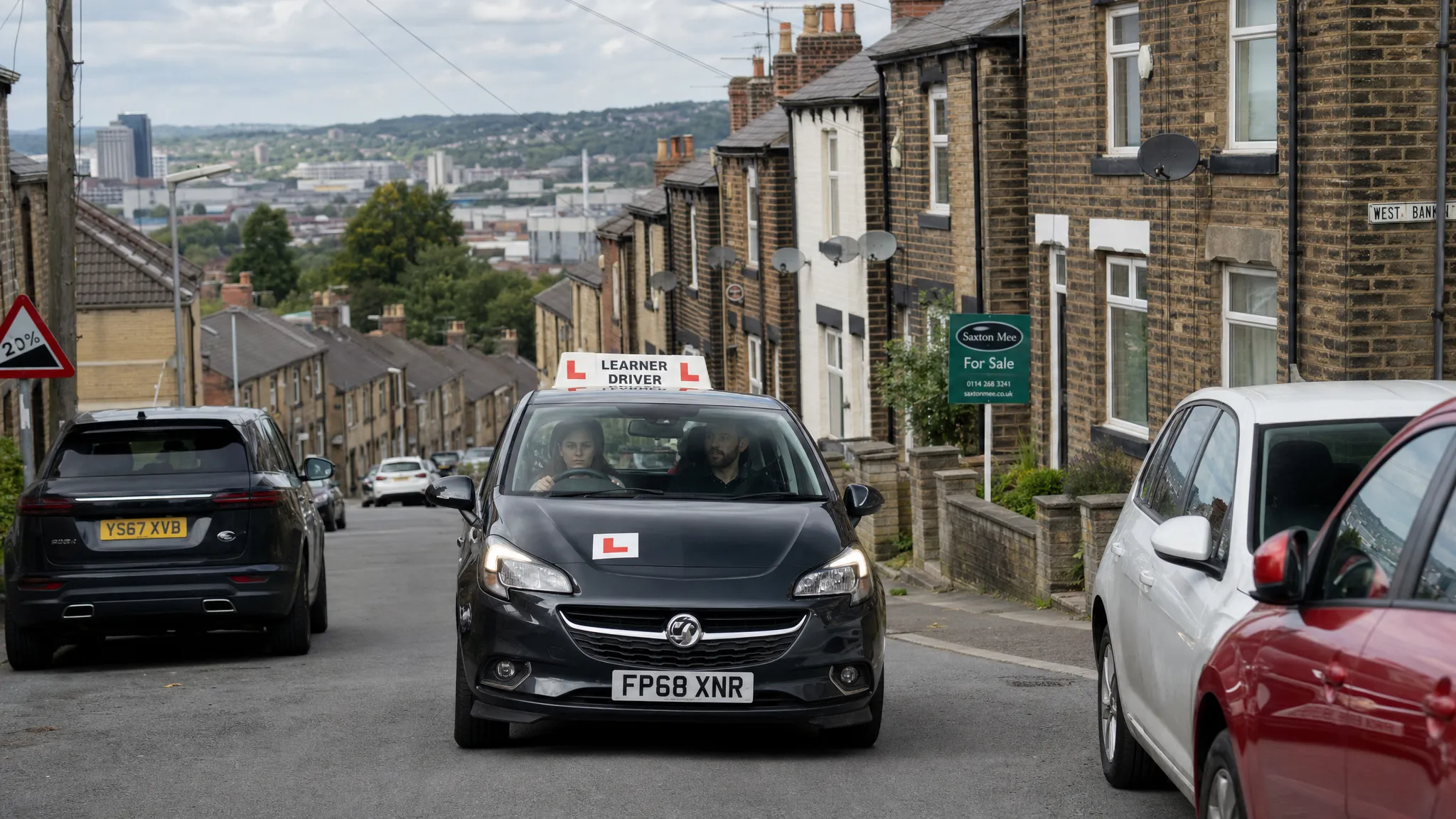
Sheffield is a rewarding city to learn in, but it gives learners plenty to think about. Hills, busy commuter routes, tight residential streets, tram areas, bus lanes, multi-lane roundabouts and changing speed limits all test different skills. A good instructor will not simply help you handle the car, they will teach you how to read the road calmly and make safe decisions in local conditions.
This checklist explains what to check before booking your first lesson, what questions to ask and how to avoid common mistakes when choosing a Sheffield driving instructor.
1. Check the instructor is properly qualified
Before you book, confirm that the instructor is legally allowed to charge for lessons. In Great Britain, paid driving instruction must be given by either an Approved Driving Instructor (ADI) or a licensed trainee instructor, known as a Potential Driving Instructor (PDI).
An ADI should display a green badge in the windscreen during lessons. A PDI should display a pink badge. A trainee instructor can still be a legitimate option, but you should know that they are still working towards full qualification.
You can also use the official GOV.UK service for finding driving schools and lessons if you want to understand how approved instruction is listed. When booking privately, it is perfectly reasonable to ask whether the instructor is an ADI or PDI before you commit.
Do not feel awkward about this. A professional instructor should be happy to explain their status clearly.
2. Ask about Sheffield experience, not just years of teaching
General experience matters, but local experience matters too. Sheffield learners face a mix of road types, from steep gradients in areas such as Crookes and Walkley to busy main roads around the city centre, Parkway approaches, Hillsborough, Ecclesall Road and Penistone Road.
That does not mean you need an instructor who only teaches on the same few roads every week. In fact, good test preparation should develop flexible driving skills rather than memorised routes. Still, an instructor who understands Sheffield's local challenges can plan lessons that gradually build confidence in realistic situations.
If you are likely to take your practical test at Handsworth or Middlewood Road, ask whether the instructor regularly prepares learners for that area. They should not promise exact test routes, as DVSA test routes are not something you can rely on, but they should understand the kinds of junctions, traffic patterns and road conditions that learners need to practise.
3. Match the teaching style to the way you learn
Two instructors can both be qualified and experienced, yet feel completely different in the car. Some learners want detailed explanations before trying a new skill. Others learn best by doing, then talking through what happened. Nervous learners may need a calm, patient pace. Confident learners may need an instructor who keeps them focused and does not let small bad habits become permanent.
Before booking, look for clues about teaching style in reviews and profiles. Words such as patient, clear, calm, structured, encouraging and honest can tell you a lot. Be cautious if reviews are vague or only talk about passing quickly without mentioning how the instructor teaches.
You can also ask a direct question before booking: “How do you usually structure lessons for a new learner?” A good answer should include some form of assessment, goal-setting and feedback, not simply “we will just drive and see how it goes”.
4. Decide whether you want manual or automatic lessons
Before comparing instructors, decide whether you want to learn in a manual or automatic car. This affects which instructors are suitable, how lessons feel and what type of licence you receive.
If you pass in a manual car, you can drive both manual and automatic cars. If you pass in an automatic, your licence will only cover automatic vehicles. For some learners, automatic lessons reduce stress and make progress feel smoother. For others, manual is the better long-term choice because it offers more flexibility.
If you are unsure, ask whether the instructor offers a short initial lesson or assessment. You can also read our guide to automatic vs manual driving lessons before deciding.
| What to compare | Manual lessons | Automatic lessons |
|---|---|---|
| Licence flexibility | Covers manual and automatic after passing | Covers automatic only |
| Early learning curve | Clutch and gears add complexity | Often simpler to start |
| Car availability | Usually more instructor choice | Availability depends on area |
| Best for | Learners who want maximum flexibility | Learners who prefer fewer controls |
The right option depends on your confidence, budget, future car plans and how quickly you want to build basic control.
5. Check availability before you get attached to an instructor
A great instructor is only useful if their availability matches yours. In Sheffield, popular instructors can be booked up, especially for evenings, weekends and school or university-friendly times.
Before you pay for anything, ask what lesson slots are normally available. If you can only do Saturday mornings and the instructor has no weekend space, it may not work even if they have excellent reviews.
Consistency is important. One lesson every three or four weeks is unlikely to build momentum for most learners. A weekly lesson is a common starting point, while some learners prefer two lessons per week or longer sessions when preparing for a test. If your schedule is limited, be honest from the start so the instructor can tell you whether they can support you properly.
Also confirm how flexible pickup locations are. For example, you may want pickup from home in S10, college, university accommodation, work near the city centre or a station. Not every instructor will cover every postcode or pickup point.
6. Understand pricing, block bookings and cancellation rules
Price matters, but it should not be the only factor. The cheapest hourly rate is not always the best value if lessons lack structure, time is wasted or you need far more hours to reach test standard.
When comparing prices, check what is included. Ask how long each lesson lasts, whether you can book single lessons before committing to a block and what happens if you need to cancel. Professional instructors should have clear rules on notice periods, late cancellations and refunds for unused prepaid lessons.
If you want a wider view of local costs, our guide to driving lessons in Sheffield explains typical pricing factors and booking considerations for learners in the city.
Be careful with large upfront payments to someone you have not met. Many learners prefer to book one lesson first, then buy a block once they are happy with the instructor's teaching style and reliability.
Payment clarity is not only a driving-school issue. In sectors where bookings and deposits are common, for example travel, specialist platforms such as Elia Pay are built around secure, traceable payment management. For driving lessons, the learner-friendly takeaway is simple: pay through methods that leave a clear record, and make sure you know exactly what each payment covers.
7. Read reviews carefully, not emotionally
Reviews are useful, but only if you read them properly. A long list of five-star ratings can be reassuring, but the details matter more than the number alone.
Look for repeated comments about punctuality, patience, clear explanations, confidence-building and honest feedback. These are stronger signs than generic praise. Also check whether reviewers mention similar learning needs to yours, such as nervous beginners, test retakes, automatic lessons or intensive preparation.
A few less-than-perfect reviews are not automatically a problem. What matters is the pattern. If several learners mention last-minute cancellations, poor communication, shouting or unclear pricing, take it seriously.
8. Ask how progress will be tracked
Good lessons should feel structured. You should know what you are working on, what improved and what needs practice before the next session.
Ask whether the instructor tracks progress against key driving skills such as moving off, junctions, roundabouts, meeting traffic, dual carriageways, reversing manoeuvres, independent driving and mock test readiness. This does not need to be complicated, but there should be a method.
Progress tracking helps you avoid two common problems: repeating the same familiar roads without moving forward, or being rushed towards a test before you are ready. It also makes it easier to understand how many more lessons you may need.
9. Make sure test preparation is realistic
Many learners ask about pass rates, but pass rates can be difficult to verify and may not tell the full story. An instructor who only presents very confident learners for test may appear to have a higher pass rate than someone who works with nervous beginners or pupils who have failed before.
Instead, ask how they decide when a learner is test-ready. A good instructor should talk about consistent safe driving, independent decision-making, mock tests, fault patterns and confidence under pressure.
You can also ask whether they will support you with practical test planning, including whether their car will be available for your chosen date. This is especially important if you are trying to move your test forward using cancellations. Never book or change a test without checking instructor and car availability first.
10. Watch for red flags before and during the first lesson
Your first lesson is not just for the instructor to assess your driving. It is also your chance to assess them.
| Red flag | Why it matters | What to do |
|---|---|---|
| They avoid confirming ADI or PDI status | You need to know they are legally able to teach for payment | Ask directly before booking |
| Prices or cancellation rules are unclear | Misunderstandings can become expensive | Get terms in writing where possible |
| They use their phone unnecessarily during lessons | Your lesson needs full attention and safety focus | Raise it once, then consider changing instructor |
| They shout, belittle or make you feel unsafe | Fear slows learning and damages confidence | Do not continue with a poor fit |
| They promise a guaranteed pass | No instructor can honestly guarantee a test result | Treat this as a warning sign |
| They push a large block booking immediately | You should be able to check the fit first | Book a single lesson before committing |
Trust your instincts. Feeling nervous because you are new to driving is normal. Feeling intimidated, ignored or confused after every lesson is not.
Questions to ask before booking a Sheffield driving instructor
You do not need to interrogate an instructor, but a few clear questions can prevent problems later. Try asking these before you book:
- Are you an ADI or PDI, and will your badge be displayed during lessons?
- Do you teach manual, automatic or both?
- Which Sheffield areas and test centres do you usually cover?
- What lesson lengths do you offer?
- What days and times are currently available?
- Can you pick up from my postcode, school, university or workplace?
- How do you track progress and decide when a learner is test-ready?
- What are your cancellation and refund rules?
- Can I book one lesson before committing to a block?
A professional instructor will not mind sensible questions. In many cases, they will appreciate that you are taking learning seriously.
How My Driving Instructor helps learners compare options
Searching manually can be time-consuming, especially if you are messaging multiple instructors and trying to compare qualifications, prices, availability and pickup areas at the same time.
My Driving Instructor makes the process easier by helping learners search for verified ADI and PDI instructors by postcode, compare profiles, read reviews and book lessons in the app. You can look for instructors who suit your location, preferred lesson type and schedule, then manage bookings more easily once you have found a good match.
For Sheffield learners, this is especially useful if you need flexible pickup locations, want to compare local reviews or are trying to find an instructor who can support your preferred test centre preparation.
Frequently Asked Questions
How do I know if a Sheffield driving instructor is qualified? Ask whether they are an ADI or PDI and check that they display the correct badge during lessons. ADIs display a green badge, while licensed trainee instructors display a pink badge.
Is it better to choose a local Sheffield instructor? Local knowledge helps, especially with hills, busy junctions, tram areas and test-centre preparation. However, the instructor should still teach adaptable driving skills rather than relying on memorised routes.
Should I book a block of lessons straight away? It is usually safer to book one lesson first, then decide whether to buy a block once you are happy with the instructor's teaching style, punctuality and communication.
What should I do if I do not feel comfortable with my instructor? Speak up if the issue is small, such as needing slower explanations. If you feel unsafe, shouted at or pressured, it is reasonable to change instructor.
Can an instructor guarantee that I will pass? No. A good instructor can prepare you properly, but nobody can guarantee a practical test result. Be cautious of anyone who promises a guaranteed pass.
Ready to compare driving instructors in Sheffield?
The best instructor for you is qualified, calm, reliable and able to teach in a way that matches your confidence and goals. Do the checks before booking, use the first lesson as a trial and avoid choosing on price alone.
With My Driving Instructor, you can search by postcode, compare verified instructors, read reviews and book lessons with confidence. It is free to use and built to help UK learners find the right instructor faster.
Key Takeaways
- Research your options and compare different instructors before booking
- Consider your learning style and choose manual or automatic accordingly
- Budget for the full journey including test fees and practice time
- Stay consistent with lessons to retain skills between sessions