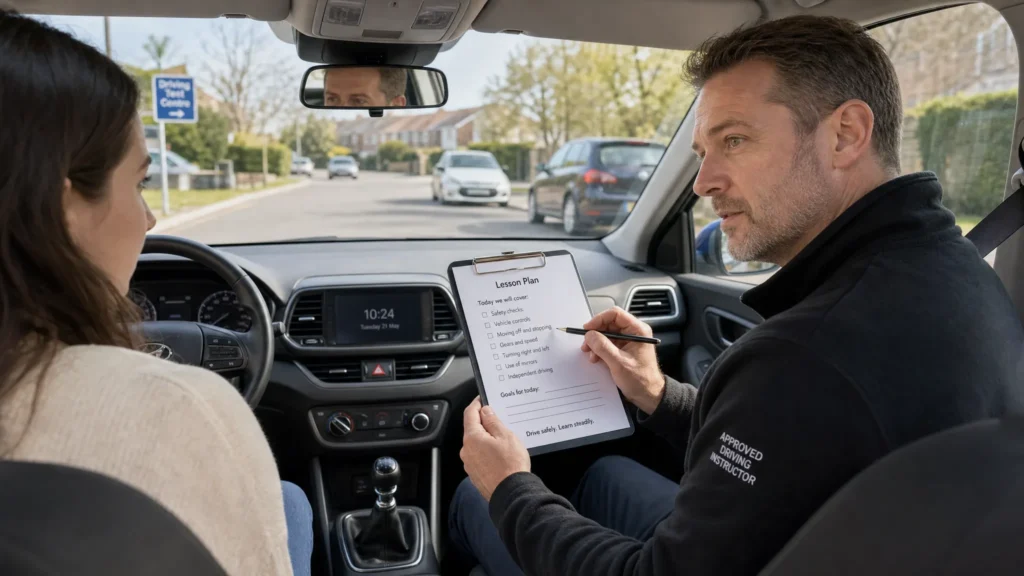
If you are learning to drive, the person sitting beside you matters. A good instructor does more than explain clutch control or remind you to check your mirrors. They help you build safe habits, understand the rules of the road and prepare for your practical test with confidence.
That is where the term approved driving instructor comes in. In the UK, it is not just a marketing phrase. It refers to a driving instructor who has met official standards and is legally allowed to give paid driving lessons, although the exact authority differs between Great Britain and Northern Ireland.
This guide explains what an approved driving instructor is, how ADIs qualify, how to check an instructor’s status and what learners should look for before booking lessons.
What is an approved driving instructor?
An Approved Driving Instructor, usually shortened to ADI, is a professional driving instructor who has been approved by the relevant licensing authority to teach learner drivers for payment.
In England, Scotland and Wales, ADIs are regulated by the Driver and Vehicle Standards Agency, known as the DVSA. In Northern Ireland, approved driving instructors are regulated by the Driver and Vehicle Agency, known as the DVA.
In everyday conversation, many learners use “ADI” to mean a fully qualified, officially approved driving instructor. The important point is simple: if someone is charging you for car driving lessons, they should be either a fully qualified approved instructor or a licensed trainee instructor.
A fully qualified ADI in Great Britain should display a green ADI badge in the windscreen during paid lessons. A trainee instructor, often called a PDI, should display a pink trainee badge. These badges help learners see whether the person teaching them is fully approved or still completing the qualification process.
If you are just starting out, it can also help to understand the wider learning process from provisional licence to test day. Our simple starter guide to learning to drive in the UK explains the main steps.
Why ADI status matters for learners
Driving is a safety-critical skill. A person may be an experienced driver, but that does not automatically make them a good teacher. Approved driving instructors are assessed on both their driving ability and their instructional ability.
That matters because learner drivers need clear explanations, calm feedback and structured progress. They also need someone who can spot unsafe habits early, adapt lessons to their confidence level and help them understand how test standards apply in real road conditions.
ADI status gives learners three important reassurances.
First, it shows that the instructor has passed a formal qualification process. In Great Britain, the official route includes checks and tests covering theory knowledge, driving ability and teaching competence. GOV.UK explains the route in its guidance on becoming a car driving instructor.
Second, it creates accountability. Approved instructors are subject to professional standards and can be checked by the regulator. This does not mean every ADI will be the perfect match for every learner, but it does mean they are part of a regulated system.
Third, it helps you avoid unqualified paid instruction. Paying someone who is not properly approved or licensed to teach can put you at risk of poor instruction and may raise legal or insurance issues.
ADI, PDI and private practice: what is the difference?
Learners often see several terms when comparing instructors. The table below explains the main differences.
| Type of person | What it means | Can they charge for lessons? | Badge to look for |
|---|---|---|---|
| ADI | A fully qualified approved driving instructor | Yes | Green ADI badge in Great Britain |
| PDI | A trainee driving instructor working under a trainee licence | Yes, if licensed | Pink trainee badge in Great Britain |
| Supervising driver | A qualified driver, such as a family member or friend, supervising private practice | They should not operate as a paid professional instructor unless approved or licensed | No instructor badge |
A PDI is not the same as a random unqualified driver. A trainee instructor has completed part of the qualification route and has permission to give paid lessons while preparing for the final instructional test. Many PDIs are capable and committed, but they are still in training.
A supervising driver is different again. They may help you practise outside formal lessons, provided they meet the legal supervision requirements, but they are not a substitute for professional tuition if they are not approved or licensed.
How does someone become an approved driving instructor?
The ADI qualification route is designed to test more than basic driving skill. In Great Britain, the process usually includes several stages.
An applicant must first pass suitability checks, including a criminal record check. They then take a theory and hazard perception test. After that, they must pass a test of their own driving ability. The final stage assesses whether they can teach effectively, manage risk and help a pupil learn in a structured way.
Once qualified, an ADI joins the official register and must continue to meet professional standards. ADIs can be called for standards checks, where their teaching is assessed. Registration also has to be renewed periodically.
This is why ADI status is best understood as a teaching qualification, not just proof that someone can drive well. Good instructors keep improving how they explain, coach and assess. Continuous learning is valuable in many professions, from driving instruction to digital skills, where structured routes such as expert-led online upskilling and certification paths help professionals keep their knowledge current.
What should you expect from a good ADI?
A good approved driving instructor should make lessons feel safe, organised and purposeful. That does not mean every lesson will be easy, but it should feel clear why you are practising certain skills and what you need to improve next.
You should expect your instructor to assess your current level, set realistic goals and give feedback you can act on. For example, instead of simply saying “you need better observations”, they should explain when to check mirrors, why it matters and how to make it part of your routine.
A professional instructor should also adapt to your learning style. Some learners want detailed explanations before trying a manoeuvre. Others learn better by watching, then practising with short prompts. If your instructor only teaches one way and you feel stuck, progress can slow down. If this is a concern for you, our guide on how to find a driving instructor who matches your learning style can help you ask the right questions before booking.
You should also expect transparent communication. That includes lesson prices, cancellation rules, pickup locations, availability and how your progress will be tracked. A professional instructor should be happy to explain these things before your first lesson.
How to check if a driving instructor is approved
Before booking, it is reasonable to ask an instructor directly whether they are an ADI or PDI. A trustworthy instructor should not be offended by the question.
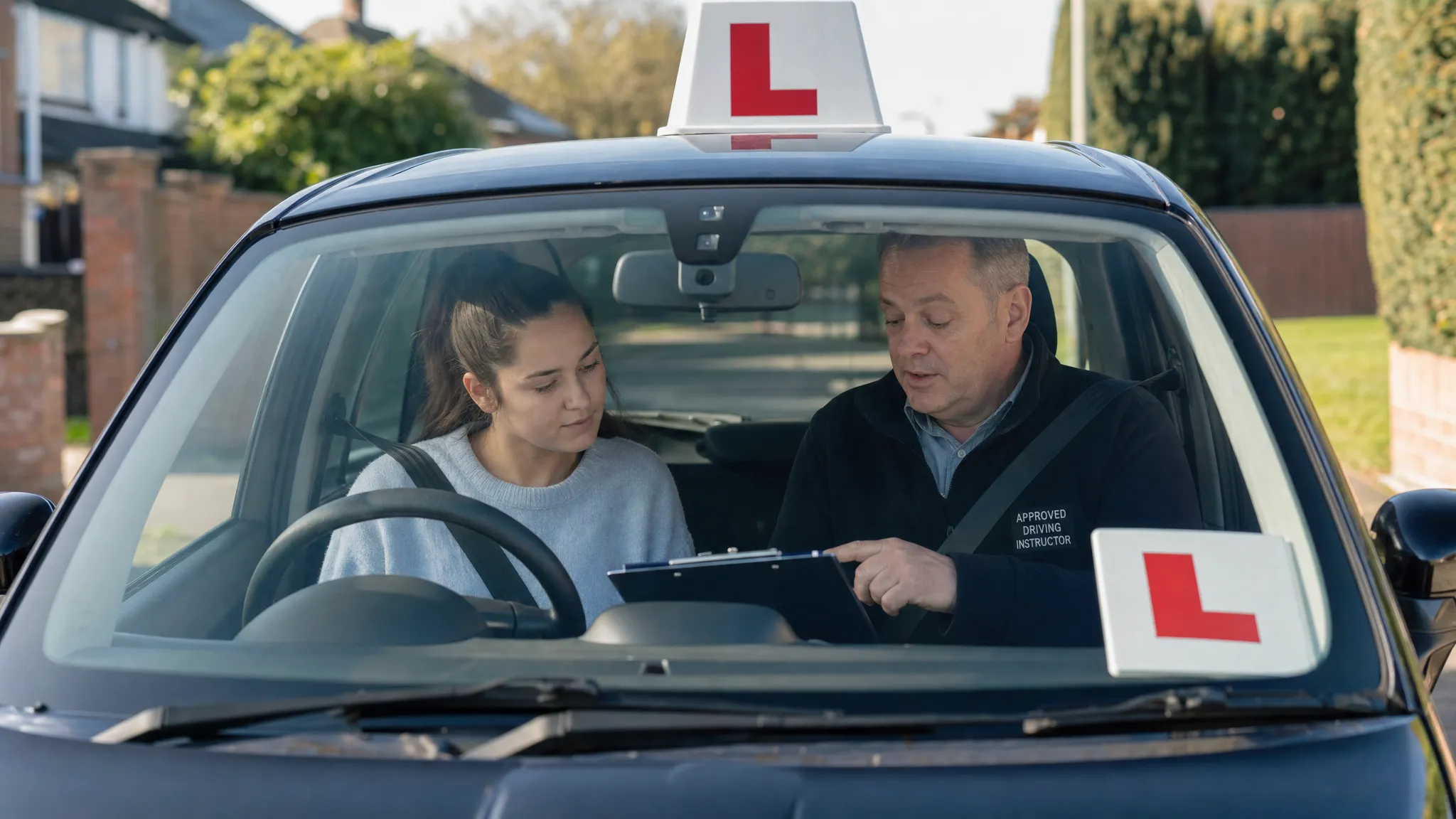
During lessons, look for the correct badge displayed in the windscreen. In Great Britain, a green badge means the instructor is fully qualified as an ADI. A pink badge means they are a licensed trainee instructor. If there is no badge, ask why.
You can also use official services. GOV.UK provides a tool to find driving schools, lessons and instructors, although not every instructor chooses to be listed publicly. If an instructor is not listed, that does not automatically mean they are unqualified, but they should still be able to show appropriate proof of status.
When comparing instructors, do not rely only on the word “approved” in an advert. Look for practical evidence such as verified status, reviews, clear pricing and a professional booking process. If you want a structured way to assess options, our guide on how to compare local driving instructors near you covers the checks that matter most.
Questions to ask before booking an ADI
Choosing an approved instructor is not only about checking a badge. You also want to know whether their teaching style, availability and local knowledge suit your needs.
Useful questions include:
- Are you a fully qualified ADI or a trainee PDI?
- Will the correct badge be displayed during lessons?
- Do you teach manual, automatic or both?
- Which test centres and local routes do you usually cover?
- How do you track a learner’s progress?
- What is your lesson price and cancellation policy?
- Can you offer pickup from home, college, work or another suitable location?
- How far ahead do I need to book lessons?
The answers should feel clear and professional. If an instructor avoids basic questions about qualifications, pricing or availability, treat that as a warning sign.
Is an ADI always better than a PDI?
A fully qualified ADI has completed the full qualification process, so many learners prefer an ADI, especially if they are nervous, close to test standard or returning to lessons after a long break.
However, a licensed PDI can still be a good instructor. They have already passed key stages of the qualification route and are gaining teaching experience. Some learners find excellent PDIs who are patient, well prepared and closely supported by a driving school.
The key is transparency. You should know whether you are booking an ADI or PDI before you start. You should also feel comfortable with the instructor’s communication style, vehicle, availability and approach to progress.
Common myths about approved driving instructors
One common myth is that ADI status guarantees you will pass quickly. It does not. Passing depends on many factors, including your starting confidence, lesson frequency, private practice, local roads, test availability and how consistently you apply feedback.
Another myth is that the most expensive instructor is automatically the best. Price can reflect experience, location, demand and vehicle type, but it should be weighed alongside reviews, reliability and teaching fit.
A third myth is that you do not need professional lessons if a family member can supervise you. Private practice can be valuable, but it works best when it reinforces safe habits learned with a qualified instructor. Without professional guidance, it is easy to repeat mistakes without realising.
Frequently Asked Questions
What does ADI stand for? ADI stands for Approved Driving Instructor. In Great Britain, this usually means a driving instructor approved by the DVSA to give paid car driving lessons.
How do I know if my instructor is an approved driving instructor? Ask whether they are an ADI or PDI, check for the correct windscreen badge and use official or verified booking sources where possible. In Great Britain, fully qualified ADIs display a green badge.
Can a trainee driving instructor charge for lessons? Yes, if they hold the correct trainee licence. In Great Britain, a trainee instructor, often called a PDI, should display a pink badge while giving paid lessons.
Is it illegal to pay someone who is not an ADI or PDI for driving lessons? In Great Britain, paid car driving instruction should only be given by a registered ADI or a licensed trainee instructor. If in doubt, check their status before booking.
Does ADI status apply across the whole UK? The term is widely used across the UK, but regulation differs. England, Scotland and Wales are covered by the DVSA, while Northern Ireland has its own DVA system for approved driving instructors.
Should I choose an ADI or a PDI? If you want a fully qualified instructor, choose an ADI. A licensed PDI can still be a valid option, but you should be told clearly that they are a trainee and should see the correct badge.
Find an approved driving instructor near you
The safest way to start is to compare instructors who are clear about their qualifications, availability, pricing and reviews.
With My Driving Instructor, learner drivers can search by postcode, compare verified ADI and PDI instructors, check reviews, book lessons and track progress in one free app. It is a practical way to find an instructor who is not only approved, but also a good fit for how you learn.
Key Takeaways
- Research your options and compare different instructors before booking
- Consider your learning style and choose manual or automatic accordingly
- Budget for the full journey including test fees and practice time
- Stay consistent with lessons to retain skills between sessions