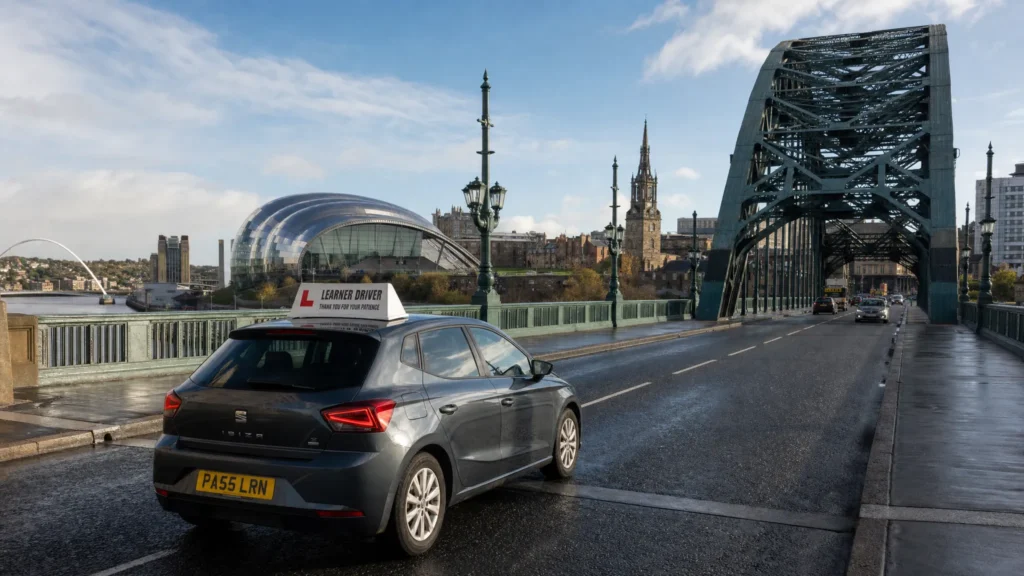
Learning to drive in Newcastle gives you a bit of everything: busy city traffic, residential streets, hills, roundabouts, bridges, bus lanes, cyclists, nightlife areas and fast-moving routes out towards the A1 and A19. That variety is useful, but it also means the instructor you choose matters.
The best driving instructors Newcastle learners can work with are not just calm and qualified. They understand the rhythm of local roads, know how to build confidence in stages and can explain what examiners are looking for without turning every lesson into a stressful mock test.
This local guide explains what to check before booking, which Newcastle driving skills to prioritise and how to compare instructors in a way that saves time, money and frustration.
Why a local Newcastle instructor makes such a difference
A good instructor teaches you to drive safely anywhere, not just around likely test routes. Still, local knowledge helps because Newcastle has driving conditions that can feel very different from one area to the next.
You might practise quiet clutch control in residential streets around Heaton, Fenham or Gosforth, then move on to busier traffic near the city centre, Jesmond, Byker, Gateshead or the Quayside. You may also need experience with bigger junctions, multi-lane roundabouts and faster roads that require earlier planning and better lane discipline.
Local familiarity is especially valuable when you are nervous. A Newcastle-based instructor can choose roads that stretch you without overwhelming you, then gradually introduce trickier conditions such as steep gradients, parked cars, pedestrians, bus lanes, cyclists and one-way systems.
If you are still at the very start of the process, it is worth reading a general overview of learning to drive in the UK so you understand provisional licences, theory tests, supervision rules and the practical test before you start comparing instructors.
What to check before booking driving instructors in Newcastle
Before you commit to lessons, check more than price and availability. A cheap lesson can become expensive if you spend weeks with an instructor who does not suit your learning style.
DVSA approval and instructor status
In the UK, a paid driving instructor should be either an Approved Driving Instructor (ADI) or a Potential Driving Instructor (PDI). ADIs display a green badge, while PDIs display a pink badge. You can also use the official GOV.UK service to find driving schools, lessons and instructors.
This matters because driving instruction is a regulated service. Professional standards, insurance, record keeping and safe teaching practices all protect learners. In other regulated sectors, organisations use tools such as AI compliance workflow automation to keep obligations clear and auditable. For a learner driver, the principle is simpler: make sure the person teaching you is properly approved and transparent about their professional status.
Local test area experience
You do not need an instructor who only drills test routes. In fact, that can create bad habits. But your instructor should understand the kinds of roads, junctions and traffic conditions that Newcastle learners commonly face.
Ask whether they regularly teach near your preferred pickup area and whether they can help you build experience across different road types, not only the roads closest to home.
Teaching style and communication
Some learners want detailed explanations. Others need short instructions and plenty of repetition. Some are confident in traffic but struggle with manoeuvres. Others are technically capable but anxious.
A good instructor should be able to explain how they adapt lessons. Before booking a block, ask how they handle nervous learners, how they give feedback and how they decide when a learner is ready to move from quiet roads to busier routes.
Manual or automatic lessons
Newcastle has a mix of stop-start traffic, hills and busy junctions, so manual lessons can involve plenty of clutch control practice. Automatic lessons may reduce that workload, which can help nervous learners focus more on observation, steering and planning.
The choice depends on your long-term needs. A manual licence allows you to drive both manual and automatic cars, while an automatic licence only allows you to drive automatics. If you are unsure, speak to instructors about your confidence, budget, future car plans and timescale.
Reviews, reliability and availability
Reviews can reveal patterns that a short phone call will not. Look for comments about punctuality, patience, clarity, progress and whether lessons feel structured. One glowing review is useful, but repeated comments from different learners are more reliable.
Availability also matters. If you can only do evenings or weekends, make sure your instructor can offer consistent slots. Long gaps between lessons can slow progress, especially in the early stages.
For a wider breakdown of comparing options, lesson formats and local considerations, you can also read this guide to choosing driving lessons in Newcastle.
Newcastle road skills your instructor should help you build
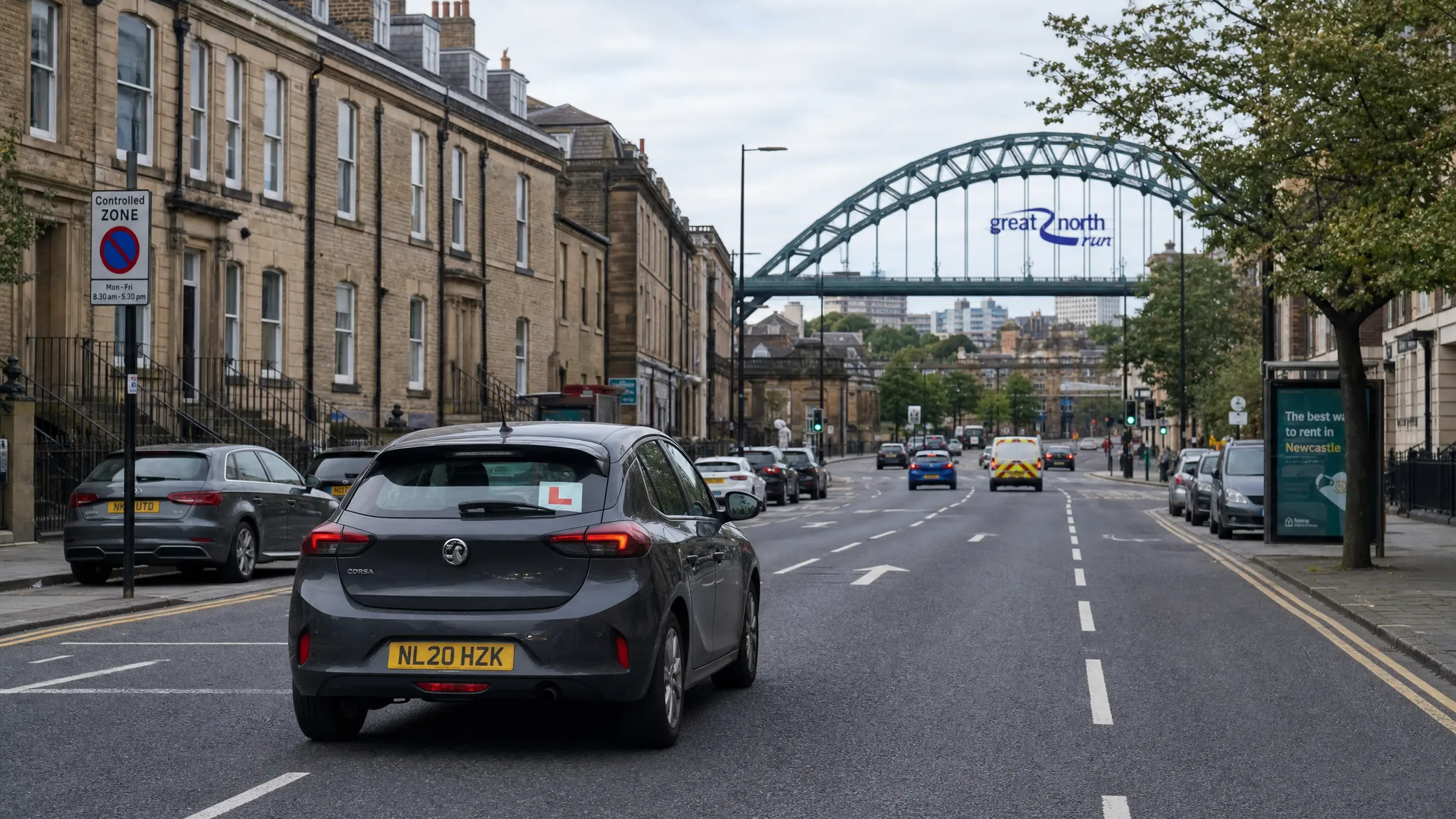
A strong learner programme should move beyond basic car control and prepare you for real local driving. Newcastle rewards early planning because lanes, hills, buses, pedestrians and parked vehicles can all appear within a short distance.
| Skill to practise | Where it often matters in Newcastle | What a good instructor should teach |
|---|---|---|
| Hill starts and clutch control | Sloped residential roads, Quayside approaches and hilly suburbs | Smooth biting point control, safe observations and calm recovery if you roll back |
| Lane discipline | Larger junctions, roundabouts and routes towards the A1, A19 or A1058 | Reading signs early, choosing lanes in time and avoiding last-second changes |
| Meeting traffic | Narrower residential streets with parked cars | Priority judgement, safe clearance and controlled speed |
| Bus lanes and cyclists | City centre roads, university areas and commuter routes | Correct lane use, timing, mirrors and safe overtaking distance |
| Pedestrian awareness | Shopping streets, nightlife areas and school zones | Scanning pavements, anticipating crossings and reducing speed early |
| Independent driving | Unfamiliar routes across Newcastle and nearby areas | Following sat nav or signs while still prioritising safety and observations |
Your instructor should not rush these skills. The aim is to become a safe driver who can handle unfamiliar situations, not someone who can perform well only on a memorised route.
How many lessons will you need in Newcastle?
There is no fixed answer. The number of lessons you need depends on your previous experience, confidence, lesson frequency, private practice, theory knowledge and how quickly you develop safe judgement.
The Driver and Vehicle Standards Agency has previously suggested that many learners take a substantial number of professional lessons plus private practice before passing, but every learner is different. What matters most is not hitting a specific number of hours. It is whether you can drive safely and independently in varied conditions.
In Newcastle, learners who practise consistently often benefit from a mix of:
- Professional lessons with a qualified instructor.
- Private practice with a suitable supervising driver, if available and insured.
- Regular theory test revision so road signs, hazards and rules feel familiar.
- Reflection after each lesson so you know what improved and what still needs work.
If you can, aim for a steady rhythm. Weekly lessons usually help more than occasional intensive bursts followed by long gaps. Intensive courses can work for some learners, but they are not a shortcut if you need more time to build confidence.
Questions to ask a Newcastle instructor before your first lesson
A short conversation before booking can tell you a lot. You do not need to interrogate the instructor, but you should feel comfortable asking practical questions.
Useful questions include:
- Are you an ADI or PDI, and can I see your badge during lessons?
- Do you teach in my area of Newcastle and offer pickup from home, work, college or university?
- Do you offer manual, automatic or both?
- How do you structure lessons for beginners or nervous learners?
- How do you track progress and decide when a learner is test-ready?
- What is your cancellation policy?
- Are there any extra costs for using the car on test day?
The answers should be clear and professional. If an instructor is vague about status, pricing, availability or policies, treat that as a warning sign.
Red flags when choosing a driving instructor
Most instructors are professional and committed to helping learners pass safely. Still, it is sensible to watch for signs that a particular instructor may not be right for you.
Be cautious if lessons regularly start late or finish early without explanation. You should also be wary if the instructor spends too much time on their phone, shouts, avoids giving structured feedback or keeps you on the same simple roads for too long without explaining why.
Another red flag is pressure to book a test before you are ready. A good instructor will encourage progress, but they should be honest about safety, consistency and independent driving ability.
Finally, do not ignore how you feel after lessons. It is normal to feel tired or challenged. It is not normal to feel belittled, confused or afraid to ask questions.
How to make lessons more effective
Your instructor has a major role, but your habits between lessons also affect progress. Newcastle roads can be busy, so being mentally prepared helps you get more from every hour behind the wheel.
Before each lesson, quickly review what you practised last time. If you struggled with roundabouts, mirrors, clutch control or positioning, tell your instructor at the start. That gives them a chance to plan a useful route rather than guessing what you need.
After the lesson, write down two things that improved and one thing to focus on next time. This simple habit helps you see progress, especially during the middle stage when learning can feel slow.
Private practice can also help, but only if it is safe and legal. Make sure the supervising driver meets the legal requirements, the car is insured for learner use and the practice route is suitable for your current ability. Private practice should reinforce your instructor’s teaching, not contradict it.
Booking your practical test locally
When you are close to test standard, you will need to choose a practical test centre and book through the official GOV.UK service. Availability can change, so check the current options directly when you are ready to book your driving test.
Your instructor can advise on timing, but the final decision should be based on consistent performance, not impatience. You should be able to drive independently, manage mistakes safely and handle unfamiliar roads without relying on constant prompts.
Mock tests are useful at this stage. They help you experience test-style pressure and identify habits that still need work, such as late mirror checks, hesitation, speed control or weak lane planning.
Using My Driving Instructor to compare Newcastle options
Finding the right instructor is easier when you can compare local options in one place. With My Driving Instructor, learners can search by postcode, compare verified ADI and PDI instructors, read reviews and ratings, book lessons and manage scheduling in the app.
That is especially helpful in Newcastle, where pickup location, availability and local experience can vary widely. A learner in Gosforth may need different lesson times and routes from someone in Jesmond, Heaton, Gateshead or Fenham. Being able to compare instructors by area and availability can save a lot of back-and-forth messages.
The platform is free for learners and supports flexible pickup locations, real-time booking and lesson progress tracking, so you can stay organised from your first lesson through to test preparation.
Frequently Asked Questions
How do I find good driving instructors in Newcastle? Start by checking that the instructor is a qualified ADI or PDI, then compare local experience, reviews, availability, teaching style and pricing. A good instructor should explain their lesson structure clearly and make you feel safe asking questions.
Is it better to learn in manual or automatic in Newcastle? Manual gives you more licence flexibility, but automatic can feel easier in stop-start traffic and on hills. The best choice depends on your confidence, future car plans and whether you want to drive manual vehicles after passing.
Do Newcastle driving instructors teach test routes? Many instructors will help you understand common local road types and areas used for test preparation, but lessons should not rely only on memorising routes. You need to be able to drive safely on unfamiliar roads too.
How often should I take driving lessons? Weekly lessons work well for many learners because they keep skills fresh. More frequent lessons may help if you are preparing for a test, while long gaps can slow progress.
Can I change instructor if lessons are not working? Yes. If you feel your instructor is unreliable, unclear or not suited to your learning style, it is reasonable to compare other options. Try to make the switch early rather than waiting until just before your test.
Ready to start learning in Newcastle?
The right instructor can make learning to drive feel structured, safe and achievable. Focus on qualifications, local knowledge, communication, reliability and steady progress rather than choosing on price alone.
Search your postcode on My Driving Instructor to compare verified driving instructors in Newcastle, check reviews and book lessons with confidence.
Key Takeaways
- Research your options and compare different instructors before booking
- Consider your learning style and choose manual or automatic accordingly
- Budget for the full journey including test fees and practice time
- Stay consistent with lessons to retain skills between sessions