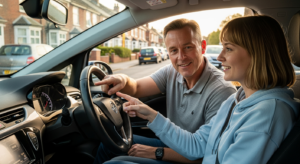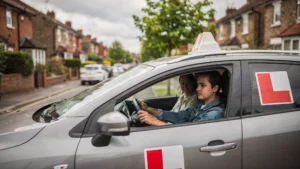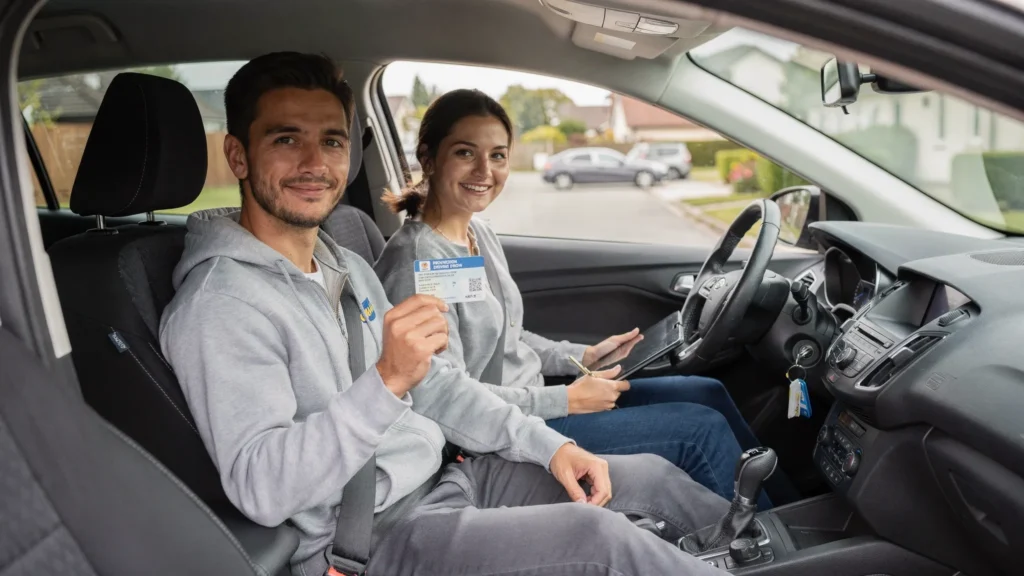
Starting your driving journey can feel like a lot to organise, especially when you are dealing with licences, instructors, theory revision, lesson costs and test waiting times for the first time. The good news is that learning to drive in the UK follows a fairly clear path once you break it down.
This starter guide walks you through the process from your provisional licence to your practical test, with simple explanations and practical tips to help you begin confidently.
The basic journey from learner to full licence
Most learner drivers follow the same broad route: get a provisional licence, start lessons, study for the theory test, build real road experience, then take the practical driving test when ready.
You do not need to understand everything on day one. What matters is knowing the next sensible step and avoiding common mistakes, such as booking a test too early, choosing an instructor based on price alone, or leaving theory revision until the last minute.
Here is the simple version:
| Stage | What you do | Why it matters |
|---|---|---|
| Get your provisional licence | Apply before you start driving | You cannot legally drive on public roads without it |
| Choose how you want to learn | Decide between manual or automatic lessons | This affects your licence entitlement after passing |
| Find a qualified instructor | Book lessons with an ADI or PDI | A good instructor helps you learn safely and efficiently |
| Start theory revision early | Study the Highway Code and hazard perception | You must pass the theory test before booking the practical test |
| Practise consistently | Build skills through lessons and, if possible, private practice | Regular practice helps confidence and decision-making |
| Book your practical test when ready | Choose a suitable test centre and date | Being ready matters more than rushing to a test slot |
Step 1: Check you can legally start learning
Before booking lessons, make sure you meet the legal basics. For most people, you can apply for a provisional driving licence before you are old enough to drive, but you generally cannot start learning to drive a car on public roads until you are 17. There are some exceptions, so always check the latest official guidance if you are unsure.
You must also be able to meet the eyesight standard. In practical terms, this means being able to read a number plate from the required distance. If you need glasses or contact lenses to meet the standard, you must wear them whenever you drive.
You can apply for your provisional licence through the official GOV.UK provisional driving licence service. Avoid unofficial websites that charge unnecessary extra fees for doing the same application.
Before your first lesson, make sure you have:
- Your provisional driving licence
- Any glasses or contact lenses you need for driving
- Comfortable shoes with thin, secure soles
- A realistic idea of your availability for lessons
- A safe way to pay and confirm bookings with your instructor
Step 2: Decide between manual and automatic lessons
One of the first choices you will make is whether to learn in a manual or automatic car. There is no universally right answer, but the decision does matter.
If you pass your test in a manual car, you can drive both manual and automatic cars. If you pass in an automatic car, your licence only allows you to drive automatics unless you later pass a manual test.
Manual lessons can feel more challenging at first because you need to learn clutch control and gear changes. Automatic lessons are often simpler mechanically, which can help some learners focus more quickly on steering, road positioning, observations and decision-making.
A quick comparison:
| Option | Best for | Things to consider |
|---|---|---|
| Manual lessons | Learners who want maximum flexibility after passing | May take longer to master if you struggle with clutch control |
| Automatic lessons | Learners who want a simpler driving experience | Passing limits you to automatic cars only |
If you are unsure, read our full guide to automatic vs manual driving lessons before you commit.
Step 3: Find the right driving instructor
Your instructor has a huge impact on how confident, safe and prepared you feel. A good instructor should be patient, reliable, clear in their explanations and honest about your progress.
In the UK, you will usually learn with either an Approved Driving Instructor, known as an ADI, or a trainee instructor, known as a PDI. ADIs display a green badge, while PDIs display a pink badge. Both can legally charge for lessons, but you should always feel comfortable asking about their qualification status, experience, teaching style and availability.
When comparing instructors, look beyond the hourly rate. A cheaper lesson is not always better value if you spend more time waiting, repeating unclear instructions, or struggling with a teaching style that does not suit you.
Useful things to compare include:
- Whether the instructor is ADI or PDI qualified
- Reviews from other learners
- Lesson prices and block booking options
- Manual or automatic availability
- Pickup and drop-off locations
- Evening or weekend lesson availability
- How they track your progress
- Whether they cover your preferred test centre area
My Driving Instructor helps learners search by postcode, compare verified instructors, read reviews and book lessons in-app. If you want a deeper checklist, see our guide on how to choose a driving instructor you can trust.
Step 4: Prepare for your first driving lesson
Your first lesson is not about being perfect. It is about getting comfortable in the car, understanding the basic controls and learning how your instructor teaches.
Most first lessons begin somewhere quiet. Your instructor may check your provisional licence, ask about your experience and explain the cockpit drill. This usually includes adjusting your seat, mirrors and steering position, fastening your seatbelt and understanding the main controls.
You may practise moving off, stopping, steering, using mirrors and controlling your speed. If you are learning manual, you may also cover the clutch biting point and gear changes.
It is completely normal to stall, feel nervous, forget an instruction or need something explained more than once. Driving is a practical skill, not a memory test. Confidence comes from repetition.
For a full breakdown, read our guide to what to expect on your first driving lesson.
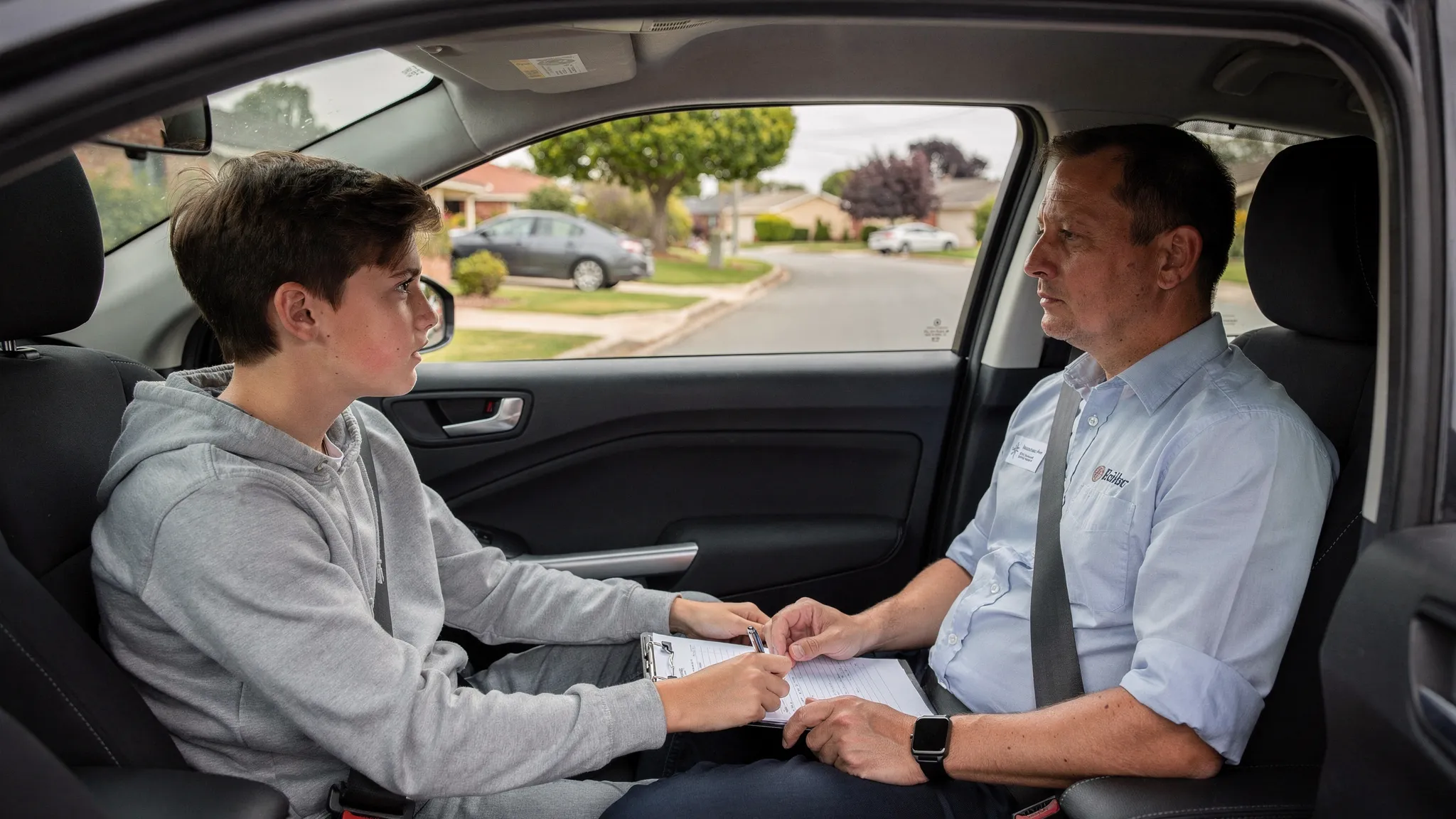
Step 5: Start theory test revision early
Many learners focus heavily on practical lessons and leave the theory test until later. That can slow you down, because you must pass the theory test before you can book your practical driving test.
The theory test includes multiple-choice questions and a hazard perception section. You will need to understand road signs, speed limits, stopping distances, vulnerable road users, motorway rules, alertness, safety margins and more.
The Highway Code is essential reading, not just something to memorise for the test. It helps you understand why your instructor asks you to check mirrors, leave space, approach junctions carefully and anticipate hazards.
A simple revision routine works better than cramming. Try studying little and often, then use mock tests to identify weak areas. Hazard perception practice is especially useful because it trains you to spot developing dangers early, which is also a key part of safe real-world driving.
This is where structured practice matters. In many fields, people build confidence by rehearsing realistic situations before they face them for real. For example, workplace teams may use AI role-play training to practise communication and decision-making under pressure. Learner drivers can apply the same principle by mentally rehearsing road scenarios, talking through hazards with an instructor and reviewing tricky situations after each lesson.
Step 6: Build a steady lesson routine
Learning to drive is easier when your lessons are consistent. One lesson every few weeks can make progress feel slow because you spend too much time remembering what you did last time. Weekly lessons are a common starting point, while some learners choose more frequent lessons if they want to progress faster.
There is no exact number of lessons that guarantees a pass. Learners vary depending on confidence, previous experience, road awareness, lesson frequency, private practice and whether they learn manual or automatic.
As a general guide, your learning will usually move through these phases:
| Phase | Typical focus | Signs you are progressing |
|---|---|---|
| Beginner | Controls, moving off, stopping, steering and basic junctions | You can control the car safely with support |
| Developing | Roundabouts, busier roads, meeting traffic, parking and manoeuvres | You make fewer repeated mistakes and need less prompting |
| Independent | Planning ahead, complex junctions, test routes and decision-making | You can drive safely with minimal help |
| Test-ready | Mock tests, polishing weak areas and managing nerves | Your instructor agrees you are consistently safe |
Private practice can help if you have access to a suitable car, correct learner insurance and a qualified supervising driver. It should support your professional lessons, not replace them. Ask your instructor what to practise so you do not accidentally build bad habits.
For more detail on realistic learning times, see our guide on how many driving lessons you may need to pass.
Step 7: Understand lesson costs and budgeting
Driving lessons are an investment, so it is sensible to plan your budget early. Costs vary by location, instructor, lesson length, car type and demand in your area.
When comparing prices, ask what is included. Some instructors offer single lessons, longer sessions, block bookings or intensive-style schedules. A slightly higher hourly rate may still be good value if the instructor is reliable, structured and well reviewed.
Budget for more than just lessons. You may also need to pay for:
- Your provisional licence
- Theory test fee
- Practical test fee
- Learning materials or apps
- Private practice insurance, if applicable
- Extra lessons close to your test
Do not pressure yourself to take a test before you are ready just to save money. Failing and rebooking can cost more in the long run, especially if you then need more lessons while waiting for another test date.
For a fuller breakdown, read our UK driving lesson costs guide.
Step 8: Know what the practical driving test involves
The practical car driving test is designed to check whether you can drive safely and independently. It usually includes an eyesight check, vehicle safety questions, general driving, independent driving and one reversing manoeuvre. You may also be asked to carry out an emergency stop.
You do not need to drive perfectly to pass. You need to show that you are safe, legal and in control. Minor mistakes can happen, but serious or dangerous faults are likely to result in a fail.
Your instructor should tell you when you are ready to book. Being test-ready usually means you can handle unfamiliar situations calmly, not just drive well on roads you already know.
Before booking, check that:
- You have passed your theory test
- Your theory pass certificate is still valid
- Your instructor agrees you are close to test standard
- Your instructor and car are available for the date
- You are comfortable with the chosen test centre area
- You understand the cancellation and change rules
If you are preparing for test day, our guide on how to pass your driving test first time covers practical tips in more detail.
Common beginner mistakes to avoid
Most learner drivers make mistakes. That is part of learning. The key is avoiding the mistakes that slow progress unnecessarily.
One common mistake is choosing the first instructor you find without checking reviews, qualifications or availability. Another is changing instructors too quickly after one difficult lesson. It is normal to have challenging lessons, especially when you start driving on busier roads.
Some learners also focus too much on passing the test and not enough on becoming a safe independent driver. The test is important, but it is only the beginning of your driving life.
Try to avoid these habits:
- Leaving long gaps between lessons
- Ignoring theory revision until you want to book the practical test
- Practising privately without guidance from your instructor
- Comparing your progress too closely with friends
- Booking a practical test before you can drive independently
- Choosing lesson price over instructor quality
A better approach is to keep a simple progress record. Note what went well, what felt difficult and what your instructor wants you to practise next. My Driving Instructor includes lesson progress tracking, which can help you see how your confidence and skills are developing over time.
A simple learning plan for new drivers
If you are just starting, use this plan as a rough guide. You can adapt it around your budget, availability and confidence.
| Timeframe | What to focus on |
|---|---|
| Before lessons | Apply for your provisional licence, compare instructors and decide manual or automatic |
| First few lessons | Learn the controls, basic observations, moving off, stopping and simple junctions |
| Early practice | Start theory revision, build confidence on quiet roads and review each lesson |
| Middle stage | Practise busier roads, roundabouts, manoeuvres and independent decision-making |
| Pre-test stage | Take mock tests, fix recurring faults and book the practical test when ready |
| After passing | Keep learning, drive carefully in different conditions and build experience gradually |
Learning to drive is not a race. Some learners progress quickly, while others need more time to feel calm and consistent. The safest drivers are usually the ones who build strong habits early, ask questions and practise regularly.
Frequently Asked Questions
When can I start learning to drive in the UK? Most people can start learning to drive a car on public roads at 17, provided they have a valid provisional licence and meet the legal eyesight rules. Some exceptions apply, so check official guidance if you are unsure.
Do I need to pass my theory test before starting lessons? No. You can take practical driving lessons before passing your theory test. However, you must pass the theory test before you can book your practical driving test.
Should I learn in a manual or automatic car? Choose manual if you want the flexibility to drive both manual and automatic cars after passing. Choose automatic if you prefer a simpler driving experience and are happy for your licence to cover automatics only.
How often should I take driving lessons? Weekly lessons are a good starting point for many learners. More frequent lessons may help you progress faster, while long gaps between lessons can make it harder to build momentum.
Can I practise with a family member or friend? Yes, if you have the correct insurance, L plates and a supervising driver who meets the legal requirements. Private practice is most useful when it supports what you are learning with a professional instructor.
How do I know when I am ready for the practical test? You are likely to be ready when you can drive safely and independently, handle different road situations calmly and complete manoeuvres without regular prompting. Your instructor should give honest guidance before you book.
Start learning with the right instructor
The easiest way to begin is to find a qualified instructor who suits your location, budget and learning style. With My Driving Instructor, you can search by postcode, compare verified ADI and PDI instructors, check reviews, book lessons and track your progress in one free app.
Start your driving journey with confidence by finding a local instructor through My Driving Instructor.
Key Takeaways
- Research your options and compare different instructors before booking
- Consider your learning style and choose manual or automatic accordingly
- Budget for the full journey including test fees and practice time
- Stay consistent with lessons to retain skills between sessions