Starting driving lessons can feel exciting, expensive, confusing and nerve-racking all at once. If you are a first-time learner, you may be wondering what happens in a lesson, how quickly you should progress, whether you need to pass your theory test first, and how to know if an instructor is right for you.
The good news is that driving lessons are not about being perfect from day one. They are structured sessions designed to build your control, observation, judgement and confidence step by step. A good instructor will not expect you to know everything already. Their job is to keep you safe, explain clearly, and help you become a responsible independent driver.
This guide explains how driving lessons work in the UK, what to prepare before booking, what you are likely to learn, and how to get the most value from every hour behind the wheel.
What are driving lessons?
Driving lessons are practical training sessions with a qualified driving instructor. In the UK, paid car lessons should be given by either an Approved Driving Instructor (ADI) or a Potential Driving Instructor (PDI). ADIs are fully qualified and display a green badge in the windscreen. PDIs are trainee instructors licensed to teach for payment and display a pink badge.
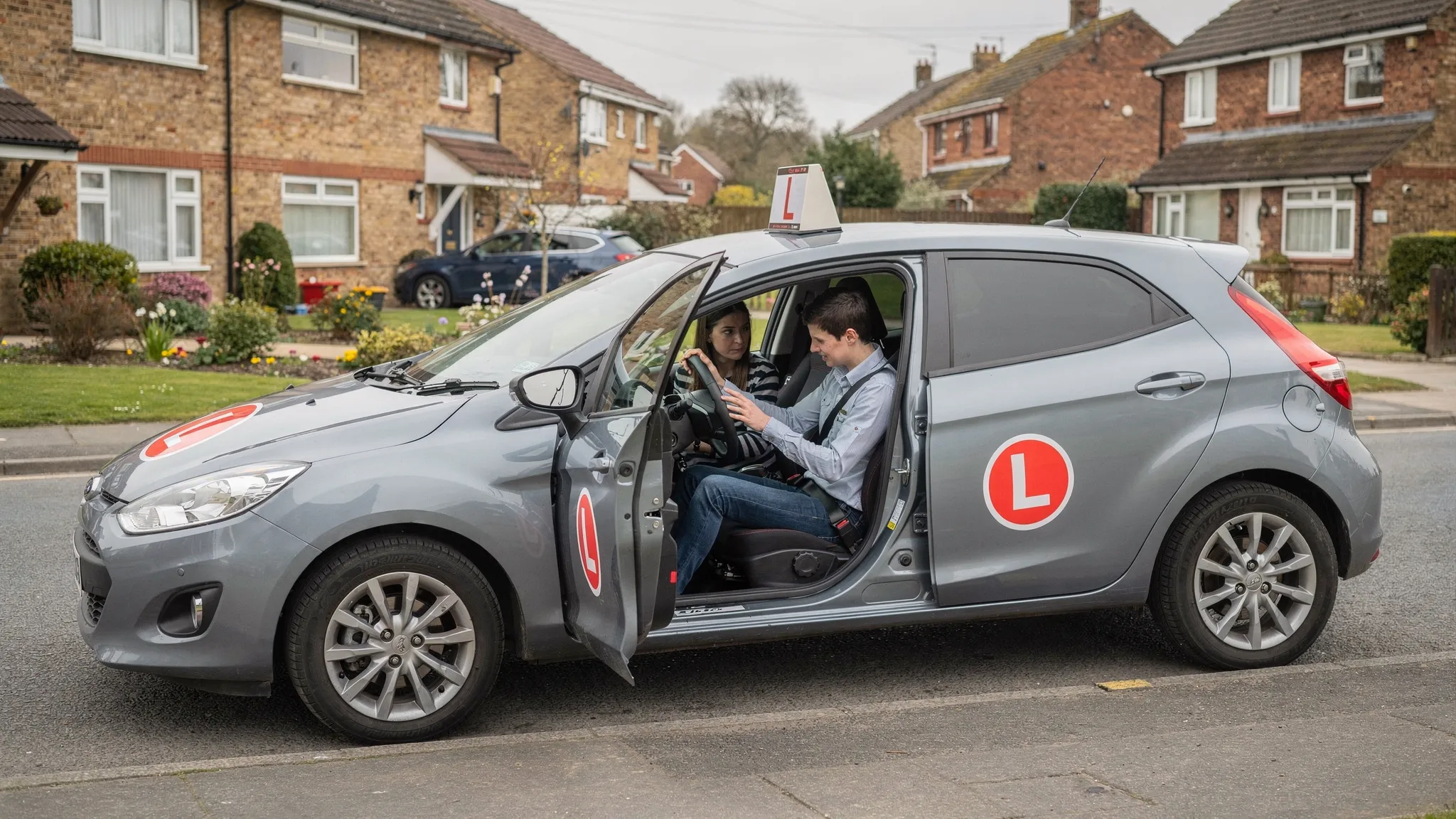
Most first-time learners take lessons in the instructor's car, which is usually insured for tuition and fitted with dual controls. Dual controls allow the instructor to brake or clutch if needed, which is one reason professional lessons feel safer than trying to learn everything with a friend or family member.
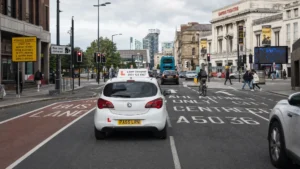
Driving lessons usually cover far more than moving the car. You learn how to read roads, manage risk, communicate with other road users, plan ahead, and drive smoothly in different traffic conditions. By the time you are test-ready, your driving should feel safe and consistent without constant prompting.
What you need before booking your first lesson
Before you start lessons on public roads, you need a valid provisional driving licence. You must also meet the eyesight requirement, which means being able to read a car number plate from 20 metres, with glasses or contact lenses if you need them. The official GOV.UK guide to learning to drive a car is the best place to check the current legal steps.
You do not need to pass your theory test before taking driving lessons. Many learners study for the theory test while they are learning practical skills, because road signs, hazards and rules make more sense once you have seen them in real traffic.
| Before you book | Why it matters | First-time learner tip |
|---|---|---|
| Provisional licence | You need it to drive legally on public roads | Apply early so you are not waiting when you find an instructor |
| Eyesight check | Your instructor may check this at the start | Bring glasses or contact lenses if you use them |
| Manual or automatic choice | It affects your lessons and licence type | If unsure, read up before committing to a block of lessons |
| Budget | Lesson prices vary by area, instructor and lesson length | Compare prices, but do not choose on price alone |
| Availability | Regular lessons help you progress faster | Look for an instructor whose diary matches your routine |
If you are nervous, tell your instructor before the first lesson. This is completely normal. Many learners start with no road experience at all, and good instructors are used to helping anxious beginners.
How a typical driving lesson is structured
Every instructor has their own teaching style, but most driving lessons follow a clear pattern. At the start, your instructor will usually confirm the lesson goal and ask how you felt after your previous session. If it is your first lesson, they may explain the car controls, seating position, mirrors and safety basics before you drive.
During the main part of the lesson, you work on one or two specific skills. For a beginner, this might be moving off and stopping, steering, clutch control, turning left and right, or emerging from quiet junctions. Later, lessons may cover roundabouts, dual carriageways, manoeuvres, independent driving and test-style routes.
At the end, your instructor should give feedback. This is where you discuss what went well, what needs more practice, and what you will focus on next time. The best feedback is specific. Instead of simply saying “good lesson”, your instructor might explain that your steering improved, but your mirror checks need to happen earlier before changing speed or direction.
What you learn as you progress
Learning to drive is not a single skill. It is a collection of smaller skills that gradually become automatic. At first, you may need to think hard about pedals, mirrors, steering and road position. Later, those basics become smoother, leaving more brain space for planning and decision-making.
| Learning stage | What you usually practise | Signs you are improving |
|---|---|---|
| Beginner | Cockpit drill, moving off, stopping, steering and basic junctions | You can control the car at low speed with less help |
| Developing | Busier roads, meeting traffic, crossroads, roundabouts and lane discipline | You spot hazards earlier and need fewer prompts |
| Independent | Following signs, sat nav driving, varied road types and complex traffic | You make safe decisions without relying on instructions |
| Test preparation | Manoeuvres, mock tests, serious fault awareness and route variety | Your driving is consistent even when you feel under pressure |
Progress is rarely perfectly smooth. You might feel confident one week and clumsy the next, especially when moving to busier roads. That does not mean you are failing. It usually means your brain is processing a new level of difficulty.
Manual vs automatic driving lessons
One of the first decisions is whether to learn in a manual or automatic car. Manual lessons teach you to use a clutch and gears. If you pass your test in a manual car, you can drive both manual and automatic cars. Automatic lessons remove clutch and gear changes, which some learners find less stressful, but an automatic licence only allows you to drive automatic vehicles.
There is no universally “better” option. Manual can be useful if you want maximum flexibility, especially if you may drive different cars for work or family. Automatic can suit learners who want a simpler driving experience, struggle with clutch control, or plan to drive automatic cars long-term.
If you are unsure, compare both options before booking a large lesson package. Our guide to automatic vs manual driving lessons explains the pros, restrictions and practical differences in more detail.
How long are driving lessons?
Many driving lessons last one hour, 90 minutes or two hours. For complete beginners, a 60 or 90 minute lesson can feel manageable because there is a lot to absorb. As you improve, longer lessons can be useful because you have more time to reach varied roads, practise independently and repeat tricky situations.
The right lesson length depends on your concentration, budget and availability. A two-hour lesson may offer better continuity, but only if you can stay focused. If you leave every session mentally exhausted after the first hour, shorter lessons may be more productive at the start.
Consistency matters more than cramming too early. Weekly lessons are a common choice for first-time learners because they keep skills fresh without overwhelming your schedule. Two lessons per week can speed up progress if your budget allows. Long gaps between lessons often mean spending extra time relearning what you had already covered.
How many driving lessons do first-time learners need?
There is no legal minimum number of driving lessons before taking the practical test. You are ready when you can drive safely and independently, not when you hit a particular number of hours.
That said, most beginners need a significant amount of practice. A commonly used planning benchmark is around 45 hours of professional tuition plus additional private practice, but some learners need less and others need more. Your progress will depend on your confidence, coordination, road experience, lesson frequency, local traffic conditions and whether you can practise privately between lessons.
Private practice can help, but it should support professional lessons rather than replace them. A qualified instructor can identify habits that a family member may miss, such as late observations, poor lane position or unsafe judgement at junctions. For a deeper breakdown, see our guide on how many driving lessons you may need to pass.
Professional lessons vs private practice
Professional lessons give you structure, expert feedback and a safe learning environment. Your instructor understands test standards, common learner mistakes and how to introduce new skills in the right order. They also know when to step in and when to let you solve problems independently.
Private practice can be valuable once you have basic control and your instructor agrees you are ready. It gives you extra time on the road and helps build confidence in everyday situations. If you practise in a family or friend’s car, you must be properly insured, display L plates, and be supervised by someone who meets the legal requirements.
A supervising driver must be at least 21, qualified to drive the type of vehicle, and have held a full licence for at least three years. Learners can drive on most UK roads when supervised correctly, but motorway practice has specific rules and must be with an approved driving instructor in a dual-control car.
How to choose the right driving instructor
Your instructor has a major impact on how quickly and confidently you learn. A good instructor should be patient, punctual, clear, professional and honest about your progress. They should explain mistakes without making you feel small, and they should adapt lessons to your learning style.
Reviews are helpful, but read them carefully. Look for comments about teaching style, reliability, communication and how the instructor helps nervous learners. A very cheap lesson price is not always good value if lessons feel disorganised or you spend too much time parked without clear learning goals.
Useful questions to ask before booking include:
- Are you an ADI or PDI?
- Do you teach manual, automatic or both?
- What areas and test centres do you cover?
- How long are your lessons?
- Do you offer pickup from home, college, university or work?
- How do you track learner progress?
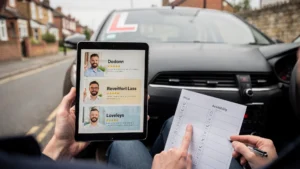
If you want a fuller checklist, read our guide on how to choose a driving instructor. You can also use My Driving Instructor to search by postcode, compare verified instructors, check reviews and book lessons in-app.
Driving instructors also have to be easy for learners to find locally. If you are an instructor reading this and want more enquiries alongside word of mouth and marketplace bookings, practical services such as local SEO support from SEO Bridge show how small service businesses can improve visibility for town and postcode-based searches.
What makes a good first driving lesson?
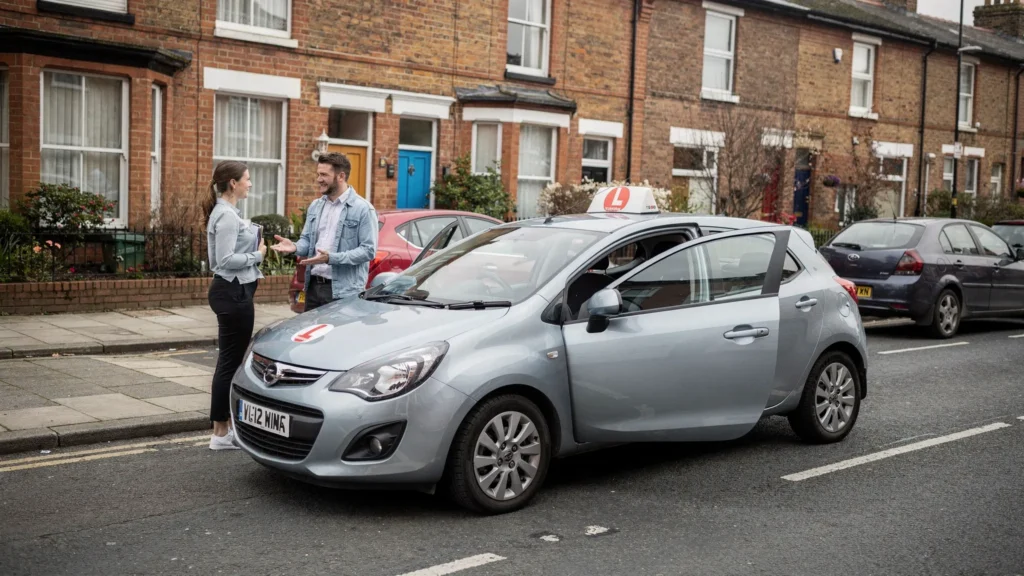
A good first lesson should feel calm, structured and safe. You should not be thrown into busy traffic before you understand the basic controls. Most instructors begin in a quiet area, explain the cockpit drill, introduce mirrors and blind spots, and help you move off and stop safely.
You may drive more than you expect, or less than you hoped. Both can be normal. The purpose of the first lesson is not to cover everything. It is to help your instructor assess your starting point and help you feel comfortable in the car.
Try not to compare your first lesson with someone else's. One learner might practise gear changes quickly because they have previous off-road experience. Another might spend longer building confidence with steering and braking. Both learners can still become safe drivers.
For a more detailed first-session walkthrough, see our guide to what to expect on your first driving lesson.
How much do driving lessons cost?
Driving lesson prices vary across the UK. Location, instructor demand, fuel costs, car type, lesson length and whether you choose manual or automatic can all affect the hourly rate. Some instructors offer block bookings, but first-time learners should consider taking one lesson before paying for a large package, especially if they have not met the instructor before.
The cheapest instructor is not always the best value. If an instructor helps you progress efficiently, gives clear feedback and turns up reliably, you may need fewer wasted hours overall. On the other hand, a high price does not automatically guarantee the right fit. Compare qualifications, reviews, availability, teaching style and lesson structure as well as cost.
For current price guidance and budgeting tips, read our UK driving lesson costs guide.
How to get more from every lesson
Driving lessons are an investment, so it makes sense to prepare properly. Arrive rested, bring your provisional licence if requested, wear suitable shoes, and avoid booking lessons when you are rushed or distracted.
Between lessons, review what you covered. You do not need to memorise a script, but it helps to remember your instructor's key feedback. For example, if you were told to check mirrors earlier before slowing down, make that your focus next time.
Simple habits that help first-time learners progress include:
- Book lessons regularly instead of leaving long gaps.
- Ask your instructor what one skill to focus on next.
- Study the Highway Code alongside practical lessons.
- Reflect on mistakes without dwelling on them.
- Practise privately only when legal, insured and safe to do so.
- Track your progress so you know what has been covered.
The DVSA Ready to Pass? campaign is also useful when you get closer to test standard, because it helps learners understand what real readiness looks like beyond simply wanting a test date.
Common first-time learner mistakes
One common mistake is expecting progress to be instant. Driving uses judgement, coordination and concentration at the same time, so it takes repetition. Stalling, steering too early, braking too harshly or forgetting mirror checks are normal beginner issues.
Another mistake is booking the practical test too early. Test waiting times can be frustrating, but taking a test before you are ready often leads to more stress, more cost and a lower chance of passing. Your instructor should be honest about your readiness and should use mock-test style driving to check whether you can cope independently.
Some learners also stay with the wrong instructor for too long. If you feel unsafe, shouted at, constantly confused or pressured to buy lessons without clear feedback, it is reasonable to look elsewhere. Learning to drive is challenging, but your lessons should still feel respectful and professional.
When are you ready for the driving test?
You are approaching test standard when you can drive safely without constant help from your instructor. This means you can deal with junctions, roundabouts, meeting traffic, speed changes, lane choices and unexpected hazards while keeping good observation and control.
Your instructor may run mock tests to assess your driving under test-like pressure. Mock tests are useful because they reveal whether you can keep standards up when the route is unfamiliar and the instructions are limited.
The practical test includes an eyesight check, vehicle safety questions, general driving, independent driving and a reversing manoeuvre. You may also be asked to do an emergency stop. If you want to understand the full test process, read our guide to what happens on the UK car test from start to finish.
Frequently asked questions
Do I need to pass my theory test before starting driving lessons? No. You can start practical driving lessons before passing your theory test, as long as you have a valid provisional licence and meet the eyesight requirement. However, you must pass the theory test before booking your practical driving test.
Is the first driving lesson scary? It can feel nerve-racking, but a good instructor will start at a suitable pace, usually in a quiet area. You are not expected to drive perfectly. The first lesson is mainly about safety, basic controls and building confidence.
Are automatic driving lessons easier than manual? Many learners find automatic lessons easier because there is no clutch or gear changing. However, if you pass in an automatic, your licence will only allow you to drive automatic cars. Passing in a manual lets you drive both.
How often should I take driving lessons? Weekly lessons work well for many first-time learners. If you want to progress faster and can afford it, two lessons per week may help. Long gaps can slow progress because you may need to recap previous skills.
Can I learn with a family member instead of an instructor? You can practise privately if you are legally supervised, insured and using a suitable car with L plates. However, professional lessons are strongly recommended because instructors understand safe teaching methods and driving test standards.
What should I do if I do not like my instructor? If the issue is small, try discussing it first. If you still feel uncomfortable, unsafe or unsupported, you can change instructor. The right teaching style makes a big difference to confidence and progress.
Ready to book your first driving lessons?
My Driving Instructor helps first-time learners find verified ADI and PDI instructors across the UK. You can search by postcode, compare prices, read reviews, check availability, book lessons and track your progress in one free app.
Whether you are nervous, excited or starting from zero experience, the right instructor can make learning feel much more manageable. Find driving instructors near you with My Driving Instructor and take the first step towards driving with confidence.
Key Takeaways
- Research your options and compare different instructors before booking
- Consider your learning style and choose manual or automatic accordingly
- Budget for the full journey including test fees and practice time
- Stay consistent with lessons to retain skills between sessions