If you are trying to book a practical test in the UK, you already know the frustrating part: driving test availability can change from “nothing for months” to “one slot next week” in seconds. Earlier dates do exist, but finding one usually takes a calm strategy, regular checking, and a clear idea of which test centres and times genuinely work for you.
The goal is not simply to grab the first cancellation you see. It is to secure the earliest practical test date you can take confidently, legally, and without creating avoidable stress for you or your instructor.
Why driving test availability changes so quickly
Practical driving test slots are limited by examiner availability, local demand, test centre capacity, weather disruption, and cancellations. In busy areas, new dates can disappear almost immediately because hundreds of learners may be searching at the same time.
Availability changes for three main reasons:
- Learners cancel or move their test because they are not ready, their instructor is unavailable, or their car is not suitable.
- The DVSA releases future slots, which may be booked quickly in high-demand areas.
- Test centres occasionally gain or lose examiner capacity, which can affect the number of available appointments.
That is why checking once and giving up rarely works. You need a repeatable approach that keeps you flexible without pushing you into a test before you are ready.
Start with the official booking routes
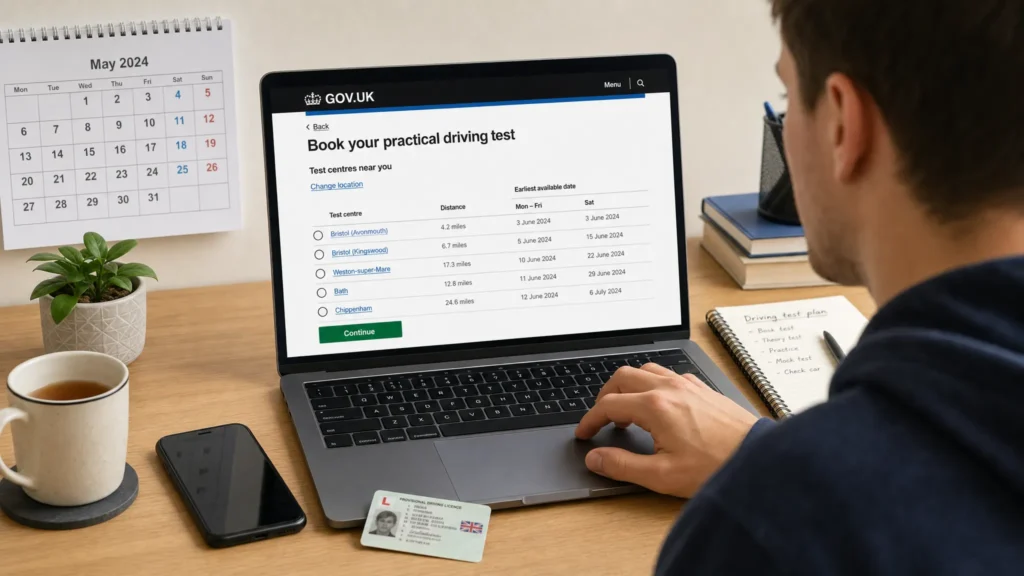
For learners in England, Scotland and Wales, the safest place to book or change a practical test is the official GOV.UK driving test booking service. If you are in Northern Ireland, use the official nidirect practical driving test service.
Before you search for earlier dates, have the essentials ready:
- Your UK provisional driving licence number.
- Your theory test pass certificate number, if requested.
- A payment card if you are booking a new test.
- Your instructor’s availability, especially if you plan to use their car.
- A shortlist of realistic test centres within travelling distance.
If you already have a test booked, use the official change service rather than cancelling first. Cancelling can leave you with no appointment if the earlier date disappears before you rebook. The official system also limits how often you can change a booking, so do not waste changes on dates you are unlikely to use.
For a more detailed step-by-step approach, My Driving Instructor has a useful guide on DVSA test booking strategy that explains how to choose the right slot rather than simply the earliest one.
Search wider, but stay realistic
One of the fastest ways to improve your chances is to widen your test centre search. If your nearest centre has no useful dates, another centre 20 to 40 minutes away may have better availability.
However, wider is not always better. Passing a test is easier when you understand the local roads, junctions, speed limits, roundabouts, and common hazards. If you choose a completely unfamiliar centre just because it has an earlier date, you may need extra lessons in that area, which can reduce the benefit of the earlier slot.
A sensible test centre shortlist might look like this:
| Test centre option | Best for | Watch out for |
|---|---|---|
| Your nearest centre | Familiar roads and easier lesson planning | Often has the highest demand |
| Nearby town or suburb | Better availability with manageable travel | You may need practice on local routes |
| Less busy rural centre | Potentially shorter waiting times | Different road types, higher-speed roads, or limited public transport |
| Major city centre | Convenient if you live or study nearby | Complex traffic, bus lanes, multi-lane roundabouts, and peak-time pressure |
Before changing to a new centre, ask your instructor whether they cover that area and whether you can practise there before test day. The cheapest or quickest slot is not a good deal if it puts you in a place you have never driven.
Use cancellations carefully
Driving test cancellations are often the best route to an earlier date. They appear when another learner changes or cancels their booking, and they can vanish almost instantly.
To make cancellations work in your favour, set clear rules before you start searching. Decide the earliest date you would genuinely be ready for, the latest time you can attend, and which centres you are willing to use. This prevents panic-booking.
You should also know the notice rules. If you change or cancel too late, you may lose your fee unless you meet the official exception criteria. Always check the current rules on GOV.UK or nidirect, especially around weekends and bank holidays.
If you are using a cancellation alert service or app, treat it as a helper, not a guarantee. Avoid any service that looks unofficial, asks for unnecessary information, or makes unrealistic promises. You remain responsible for checking the booking details, test centre, date, time, and vehicle arrangements.
Coordinate with your instructor before grabbing a date
The biggest mistake many learners make is booking an earlier test without confirming that their instructor is available. If your instructor cannot attend, you may have to take the test in your own car, borrow a suitable car, or move the date again.
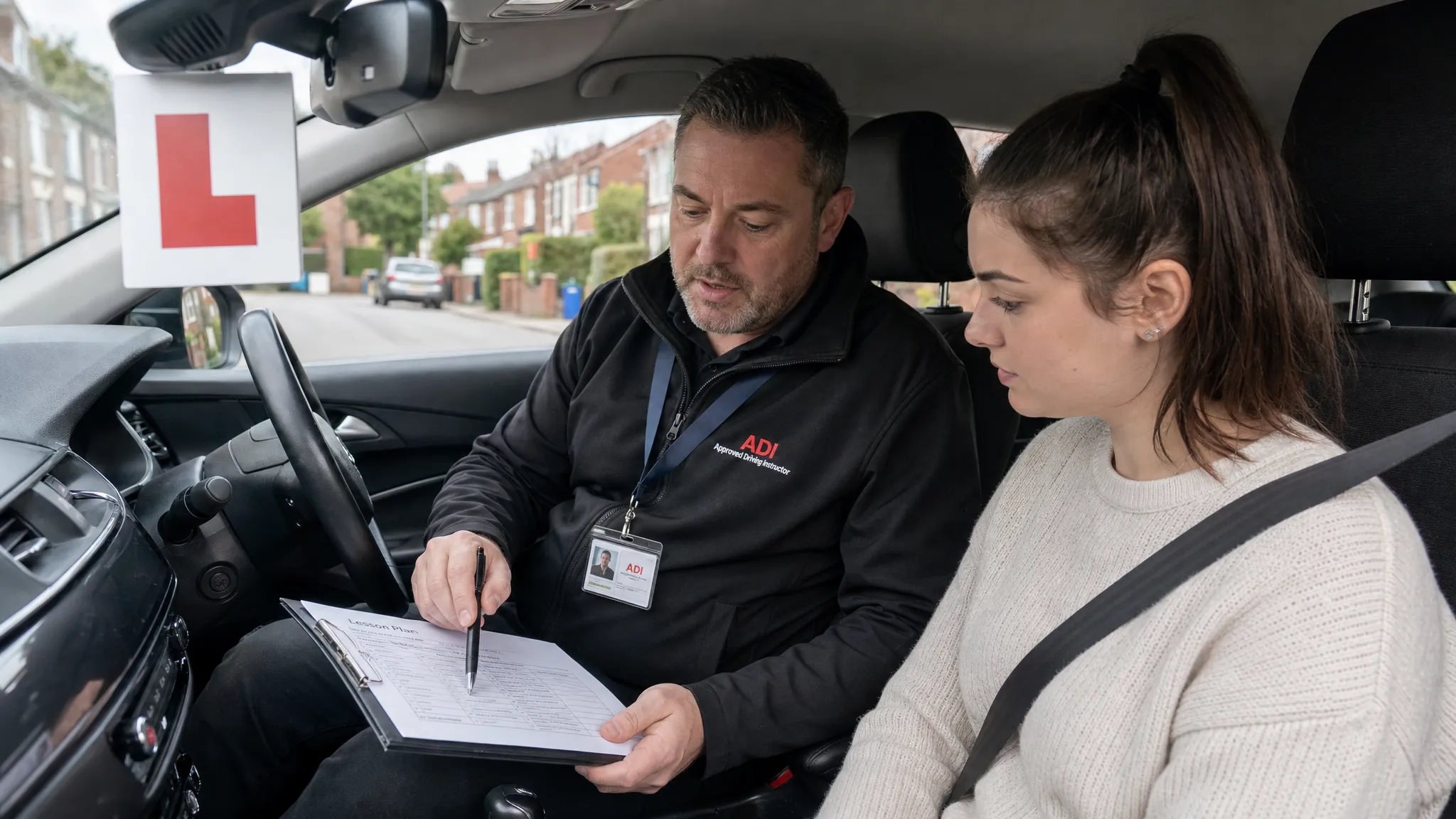
Before searching for earlier dates, agree a clear plan with your instructor. Ask which days and times they can support, whether they are available for nearby test centres, and how much notice they need. If your instructor is fully booked, even a perfect cancellation may not be useful.
This is where lesson organisation matters. With My Driving Instructor, learners can find verified ADI and PDI instructors by postcode, compare options, book lessons, and keep track of progress in one place. That makes it easier to plan around a realistic test date rather than relying on guesswork.
Verification matters in every practical, safety-critical skill. The person coaching you can make a real difference, whether you are learning roadcraft in a car or comparing specialist courses such as technical diving and instructor training in Thailand. For driving, that means working with a qualified instructor who understands test standards, local routes, and when you are genuinely ready.
Check availability at the right times
There is no perfect time that guarantees an earlier test, but checking patterns can help. New availability and cancellations can appear at different times, so you are looking for consistency rather than luck.
Try checking:
- Early in the morning, before work and college traffic builds.
- Late in the evening, when other learners may be changing plans.
- Shortly after you speak to your instructor, while their availability is still clear.
- More frequently during school holidays or university breaks, when learner schedules often change.
- After bad weather or local disruption, when some tests may be moved or rebooked.
Do not spend all day refreshing booking pages. It is stressful and often unproductive. A better routine is to check at set times, keep your centre shortlist ready, and act quickly only when a suitable date appears.
If you want more tactics without compromising readiness, the guide to practical test booking tips for quicker test dates covers additional ways to improve your chances.
Be flexible with time of day, but know your limits
Many learners search only for mid-morning tests because they want quieter roads. That can be sensible, but it also reduces your options. If you can handle different traffic conditions safely, widening your time window may help you find earlier dates.
That said, not every time is suitable for every learner. A test during the school run, rush hour, or in poor winter light can feel very different from a quiet late-morning lesson. If you struggle with busy roundabouts, meeting traffic, or complex junctions, do not choose a difficult time just because it is earlier.
Ask your instructor what test times match your current ability. They may recommend avoiding certain periods until you have practised them. Their advice can save you from turning an earlier opportunity into an unnecessary fail.
Avoid scams and unrealistic promises
High demand creates a market for shortcuts, and not all of them are safe. Be cautious with anyone selling “guaranteed” earlier test dates, asking for your licence details through social media, or pressuring you to pay quickly.
Warning signs include:
- No clear company details or contact information.
- Requests for passwords or unnecessary personal data.
- Claims that they can access secret DVSA slots.
- Inflated fees without a clear service description.
- Refusal to explain how your booking will be changed.
The DVSA does not offer secret test slots to private sellers. Earlier dates usually come from the same basic sources: official availability, cancellations, and released future appointments. If a service sounds too good to be true, assume it needs checking before you trust it.
Do not book earlier than your driving standard
Finding an earlier practical test date feels like progress, but passing still depends on your driving standard. If you move your test forward before you are consistently safe and independent, you may lose money, confidence, and time.
You are probably close to test-ready when you can:
- Drive safely without repeated instructor prompts.
- Handle unfamiliar roads without panic.
- Follow sat nav directions and traffic signs confidently.
- Complete manoeuvres with good observation and control.
- Respond calmly to mistakes and correct them safely.
- Manage roundabouts, dual carriageways, meeting situations, and pedestrian crossings independently.
Your instructor’s judgement is important here. If they advise waiting, it is usually because they can see risk that may not be obvious from the learner seat. If you are unsure whether to book now or hold off, read this guide on when to book your driving test for success.
What to do if no earlier dates appear
Sometimes there simply is no suitable earlier appointment. That does not mean you are stuck. Use the waiting time to increase your chance of passing first time.
Focus on the areas that commonly cause test faults: observations at junctions, speed choice, lane discipline, mirror use, positioning, response to signs, and planning ahead. Practise at different times of day and, if possible, in different weather conditions. The more situations you experience before your test, the less surprising the test will feel.
You can also use the time to plan practical details. Confirm the car you will use, check insurance if using your own car, make sure the vehicle is test-ready, and know exactly where the test centre is. Small admin mistakes can ruin a good opportunity, especially if you eventually find a short-notice cancellation.
Frequently Asked Questions
How often should I check driving test availability? Check at consistent times each day rather than refreshing constantly. Early mornings and evenings can be useful, but cancellations can appear at any time.
Can I book a test at any UK test centre? You can choose from available centres, but it should be practical for you and your instructor. Make sure you can practise in the area before test day.
Are driving test cancellation apps safe? Some can be useful, but you should be cautious. Use reputable services, avoid sharing unnecessary personal information, and always confirm the final booking through official channels.
Should I take the earliest driving test date I can find? Not always. Take the earliest date that matches your readiness, instructor availability, and ability to reach the test centre calmly and on time.
What if my instructor is not available for an earlier test? Ask whether another suitable date works, whether they cover the chosen test centre, or whether you have a safe and legal alternative vehicle. Do not assume they can rearrange at short notice.
Find an earlier date with a better plan
Driving test availability is competitive, but you can improve your chances by using official booking routes, checking regularly, widening your search sensibly, and staying aligned with your instructor.
If you need help planning lessons around your test goal, My Driving Instructor lets you search verified instructors by postcode, compare reviews, book lessons, and track your progress. Build the right support around your test date, and you will have a much better chance of making that earlier slot count.
Key Takeaways
- Research your options and compare different instructors before booking
- Consider your learning style and choose manual or automatic accordingly
- Budget for the full journey including test fees and practice time
- Stay consistent with lessons to retain skills between sessions