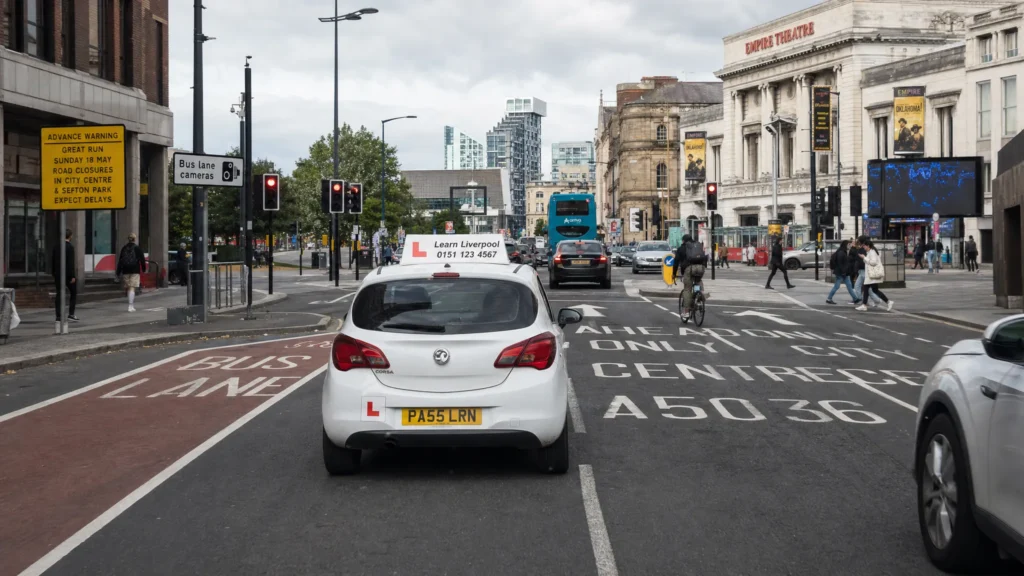
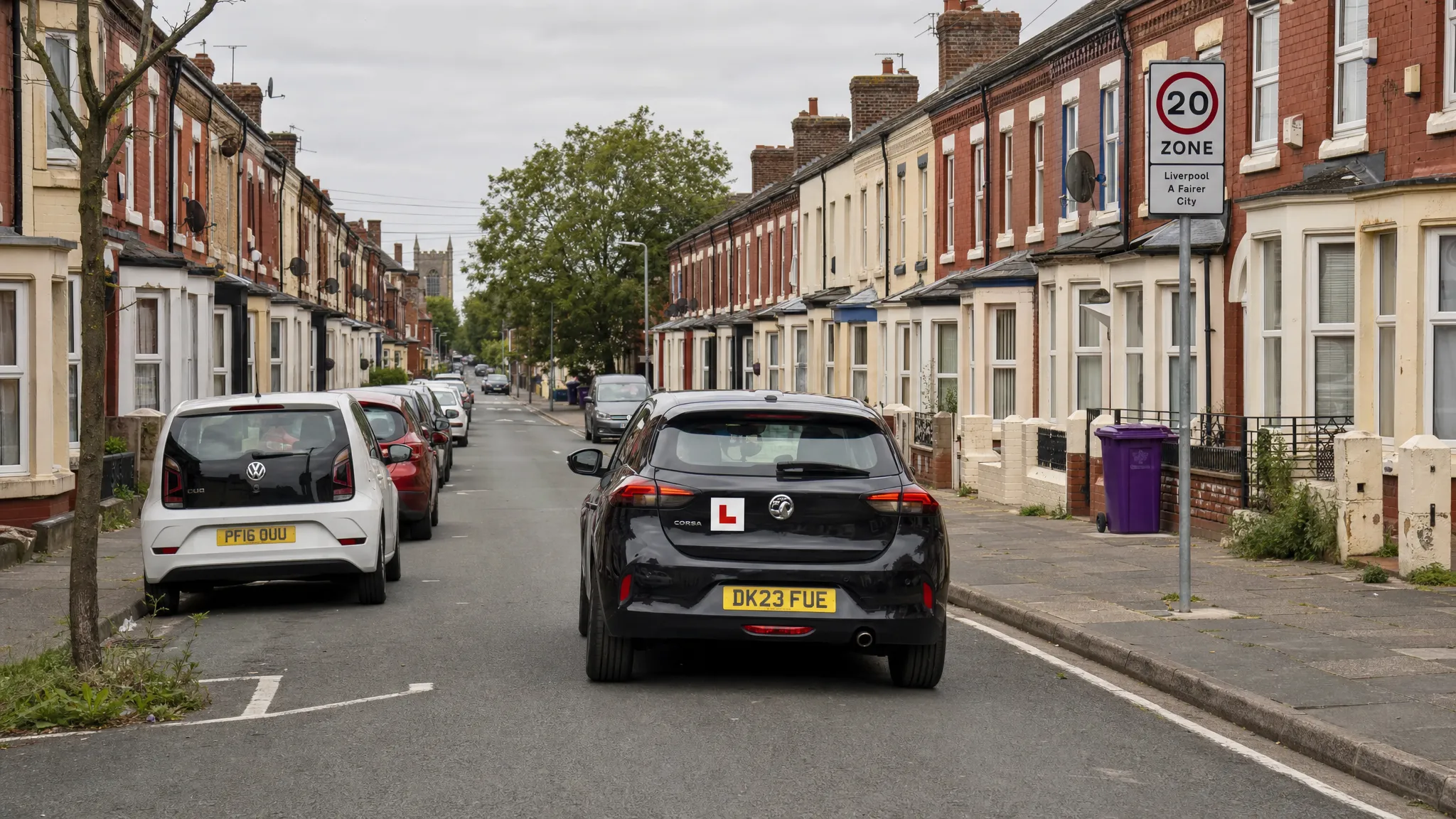
If you are comparing driving lessons in Liverpool, expect more than a simple route around quiet streets. Liverpool is a varied place to learn, with residential roads, busy high streets, multi-lane junctions, faster routes, 20 mph zones, bus lanes, cyclists, pedestrians and plenty of real-world decision making.
That variety is a good thing. A well-planned course of lessons in Liverpool should build your confidence gradually, starting in calmer areas and moving towards more complex roads as your control, observation and judgement improve.
This guide explains what learners should expect from Liverpool driving lessons, how local practice usually develops, what to ask before booking, and how to choose an instructor who suits your learning style.
Why Liverpool is a useful place to learn to drive
Liverpool gives learner drivers a strong mix of road conditions. You might practise clutch control and meeting traffic on quieter residential streets, then move on to busier roads around areas such as Allerton, Wavertree, Aigburth, Bootle, Crosby, Speke or the city centre, depending on where you live and where your instructor works.
The city also has a wide range of junction types. Learners may encounter mini-roundabouts, larger roundabouts, traffic-light controlled crossroads, one-way systems, bus lanes, pedestrian crossings and roads with heavy parking on both sides. This helps you build the kind of awareness you need for both the test and everyday driving after you pass.
You should not be thrown into difficult traffic before you are ready. A good Liverpool instructor will match the route to your current ability, then increase the challenge in a controlled way.
What usually happens in your first few Liverpool lessons
Your first lessons are normally about safety, control and confidence. If you are a complete beginner, your instructor will usually start somewhere quiet, where you can learn the basics without pressure from heavy traffic.
You will normally cover the cockpit drill, basic controls, moving off, stopping safely, steering, mirror checks, signalling and understanding the clutch if you are learning in a manual car. If you already have experience, your instructor may assess your current ability and plan future lessons around the gaps they notice.
For a more general beginner breakdown, you can also read our guide to what to expect on your first driving lesson.
| Learning stage | What you may practise | What to expect |
|---|---|---|
| First lessons | Cockpit drill, moving off, stopping, basic steering, mirrors | Quiet roads, lots of explanation and short driving sections |
| Early confidence | Junctions, parked cars, meeting traffic, left and right turns | More independent control with instructor prompts |
| Intermediate lessons | Roundabouts, traffic lights, busier roads, lane discipline | Longer drives with fewer pauses and more decision making |
| Test preparation | Manoeuvres, independent driving, mock tests, local test centre practice | Realistic routes, feedback sheets and fault analysis |
| Advanced learner practice | Faster roads, complex junctions, night or poor weather driving where possible | Building confidence beyond minimum test standard |
Local road skills Liverpool learners often need
Liverpool lessons should not be about memorising a few roads. They should prepare you to handle different situations safely and independently. Still, local knowledge matters because Liverpool has road features that can catch learners out.
You are likely to practise:
- Meeting traffic on narrow residential streets where parked cars reduce space and you need to judge priority calmly.
- Bus lanes and lane markings in busier areas, where reading signs early prevents last-minute lane changes.
- Roundabouts and multi-lane junctions where planning, mirrors, signalling and lane discipline need to work together.
- Pedestrian-heavy roads near shops, schools, stations and the city centre, where speed control is essential.
- Faster roads and dual carriageways once your instructor feels you are ready for higher-speed decision making.
- Hill starts and controlled stops in areas where gradients, traffic and parked cars can make clutch control more demanding.
A strong instructor will explain not only what to do, but why. For example, they may ask you to talk through hazards, identify escape routes, or describe what a pedestrian, cyclist or bus driver might do next. This builds anticipation, which is one of the biggest differences between a nervous learner and a safe independent driver.
Manual or automatic driving lessons in Liverpool
Both manual and automatic driving lessons are common in Liverpool. The right choice depends on your goals, confidence and budget.
Manual lessons give you a licence that allows you to drive both manual and automatic cars once you pass. They can be a good option if you want maximum flexibility, especially if you may share a family car or drive older vehicles in future. The challenge is that clutch control, gear changes and hill starts add an extra layer of learning.
Automatic lessons can feel calmer for some learners because you do not need to manage the clutch or gears. This may be helpful in stop-start traffic, busy junctions or if you are especially anxious about stalling. However, if you pass in an automatic, your licence will only allow you to drive automatic cars unless you later pass a manual test.
If you are unsure, compare both options before committing. Our full guide to automatic vs manual driving lessons explains the licence rules and practical differences in more detail.
How many lessons will you need in Liverpool?
There is no single number that suits everyone. Your lesson total depends on your confidence, coordination, road experience, lesson frequency, private practice and whether you choose manual or automatic.
The DVSA has often referred to learners taking around 45 hours of professional lessons plus additional private practice, but this is only a broad guide. Some learners need fewer hours, while others need more, especially if they are nervous, have long gaps between lessons, or are learning in challenging traffic conditions.
In Liverpool, your progress may also depend on where you practise. A learner who mainly drives quiet suburban roads may build basic control quickly, but still need extra time on complex junctions and busy roads. Another learner who starts near heavier traffic may feel slower at first, then become more confident once the basics settle.
For a deeper look at lesson numbers and planning, see our guide on how many driving lessons you may need to pass.
What should driving lessons in Liverpool cost?
Driving lesson prices vary by instructor, car type, lesson length, availability and whether you book individual lessons or a block. Liverpool is a competitive area, but you should still compare value rather than choosing only the lowest hourly rate.
A slightly cheaper lesson is not always better if you spend more time parked up, receive vague feedback or struggle to book regular slots. A slightly higher rate may be worth it if the instructor is reliable, explains clearly, tracks your progress and understands local test expectations.
Before booking, ask these questions:
- What is the lesson length, 60, 90 or 120 minutes?
- Is pickup included from home, work, college or university?
- What is the cancellation policy?
- Do you teach manual, automatic or both?
- Do you offer progress tracking or written feedback?
- Are you an ADI or PDI, and can I see your badge in the car?
You can compare wider UK price factors in our driving lesson costs guide.
What to expect when preparing for the practical test
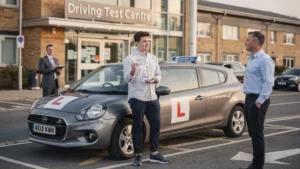
Liverpool learners usually prepare around the test centre they plan to use, but test preparation should never rely on route memorisation. DVSA examiners can vary routes, traffic conditions change, and roadworks can alter familiar roads at short notice.
Liverpool learners may look at local test centre options such as Garston or Norris Green, although you should always check the official booking system for current availability and correct details. You can book and manage your practical test through the official GOV.UK driving test service.
A practical test normally includes an eyesight check, vehicle safety questions, general driving, independent driving, one reversing manoeuvre and possibly an emergency stop. Your instructor should help you prepare through realistic mock tests, not just repeated practice of the same roads.
During test preparation, expect your instructor to focus on:
- Independent driving with sat nav or traffic signs.
- Safe judgement at junctions, roundabouts and crossings.
- Positioning and speed control on different road types.
- Manoeuvres such as parallel parking, bay parking or pulling up on the right.
- Reducing repeated faults, especially observations, clearance, signals and lane discipline.
If you want the full test-day process, read our guide to what happens on the UK car test from start to finish.
Can learners drive on motorways near Liverpool?
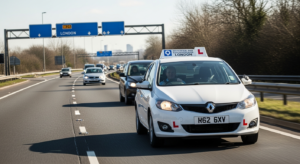
Learner drivers can take motorway lessons in England, Scotland and Wales only with an approved driving instructor in a dual-control car. That means you may be able to practise on motorways around Liverpool, such as routes connecting towards the M62 or M57, but only when your instructor judges it appropriate and the legal conditions are met.
Motorway practice is not part of the practical driving test, but it can be valuable before you pass. It helps you understand joining and leaving slip roads, lane discipline, following distances, speed management and planning further ahead.
If you are not ready for motorway practice, your instructor may first use faster A-roads or dual carriageways to build confidence gradually.
What makes a good Liverpool driving instructor?
A good instructor is not just someone who knows the roads. They should be qualified, patient, punctual, clear, consistent and able to adapt to the way you learn.
Look for an instructor who explains progress in a way you understand. You should know what went well, what needs work and what you will practise next. If you regularly finish lessons feeling confused, rushed or criticised without useful guidance, it may not be the right fit.
Important signs of a good instructor include:
- A visible ADI or PDI badge during lessons.
- Clear communication before and after bookings.
- Reliable timekeeping and a clean, roadworthy car.
- Calm feedback, even when you make mistakes.
- Knowledge of Liverpool roads and nearby test centre expectations.
- Reviews that mention patience, confidence building and structured lessons.
You can also read our complete guide on how to choose a driving instructor before booking.
Building safe habits beyond the test
It is natural to focus on passing, but the best driving lessons in Liverpool should help you become a safe driver for life. Smooth control, good planning and passenger comfort matter long after the test is over.
Professional driving settings show how valuable these habits can be. For example, business transport providers such as specialist chauffeur services rely on vetted drivers, planning and calm decision making to make journeys reliable. Learners do not need to drive like professionals immediately, but the same foundations apply: observation, anticipation, safe spacing and respect for passengers and other road users.
This is why your instructor may challenge you to think beyond instructions. Instead of saying only “turn left”, they may ask, “What could affect your turn here?” or “Where is the next risk likely to come from?” These questions help you develop judgement, not just mechanical skill.
How to get more from each lesson
Regular lessons usually work better than long gaps. Weekly or twice-weekly sessions help you retain skills, especially in the early stages. If you can practise privately between lessons, make sure you follow the legal rules, including correct supervision, insurance, L plates and a suitable vehicle.
Private practice should support professional lessons, not replace them. Ask your instructor what to practise, where to practise and what to avoid. For example, they might suggest quiet junction work, parking practice or commentary driving, but ask you to leave complex roundabouts until you have covered them together.
You can also keep a simple progress note after every lesson. Write down what you practised, what improved, what felt difficult and what you want to ask next time. This helps you arrive prepared and makes your learning more active.
Finding driving lessons in Liverpool with My Driving Instructor
My Driving Instructor helps learners find verified driving instructors across the UK, including Liverpool. Instead of relying only on word of mouth, you can search by postcode, compare instructor profiles, read reviews and book lessons through the app.
The platform is free for students and instructors. Learners can look for ADI or PDI instructors, check availability, compare prices, arrange suitable pickup locations and track lesson progress. This makes it easier to find someone who matches your goals, whether you want a calm beginner-friendly instructor, automatic lessons, manual lessons or test preparation support.
If you are ready to start, search your Liverpool postcode on My Driving Instructor and compare local instructors before you book.
Frequently Asked Questions
Are driving lessons in Liverpool suitable for nervous beginners? Yes. A good instructor will begin in quieter areas, explain each step clearly and increase the difficulty only when you are ready. If you are nervous, look for reviews that mention patience, calm teaching and confidence building.
How many driving lessons do I need in Liverpool? It varies. Many learners use the DVSA’s broad guidance of around 45 professional hours plus private practice as a reference point, but your actual number may be higher or lower depending on experience, confidence and lesson consistency.
Should I learn in manual or automatic in Liverpool? Choose manual if you want the flexibility to drive both manual and automatic cars after passing. Choose automatic if you want a simpler driving experience and are happy with an automatic-only licence unless you take a manual test later.
Which Liverpool test centre should I choose? Choose a test centre based on availability, your instructor’s advice, your location and where you can practise regularly. Do not choose purely because you think one centre is “easy”, as routes and traffic conditions vary.
Can I book Liverpool driving lessons before passing my theory test? Yes. You can take practical lessons with a provisional licence before passing your theory test. However, you must pass the theory test before booking the practical driving test.
Can I be picked up from home, university or work? Many instructors offer flexible pickup locations, but it depends on their area, timetable and travel time. Always confirm pickup arrangements before booking.
Ready to start driving lessons in Liverpool?
The right instructor can make learning feel clearer, calmer and more structured. With My Driving Instructor, you can search by postcode, compare verified instructors, read reviews and book lessons that fit your schedule.
Start your search today with My Driving Instructor and take the next step towards passing with confidence.
Key Takeaways
- Research your options and compare different instructors before booking
- Consider your learning style and choose manual or automatic accordingly
- Budget for the full journey including test fees and practice time
- Stay consistent with lessons to retain skills between sessions